It’s 6:45 on a Tuesday evening. You’ve made your baby’s favorite mashed banana. You’ve got the little spoon ready and the bib on. And your baby clamps their mouth shut, turns their head, and starts to cry.
Yesterday they ate everything. Today, nothing. So you start to wonder: is something wrong?
If this sounds familiar, take a deep breath. You’re far from alone. One of the most common questions parents ask is: do babies eat less when teething? In most cases, the answer is yes. This guide explains why it happens, how long it lasts, and what you can do about it, in plain words and simple steps.
Quick Answer: Do Babies Eat Less When Teething?
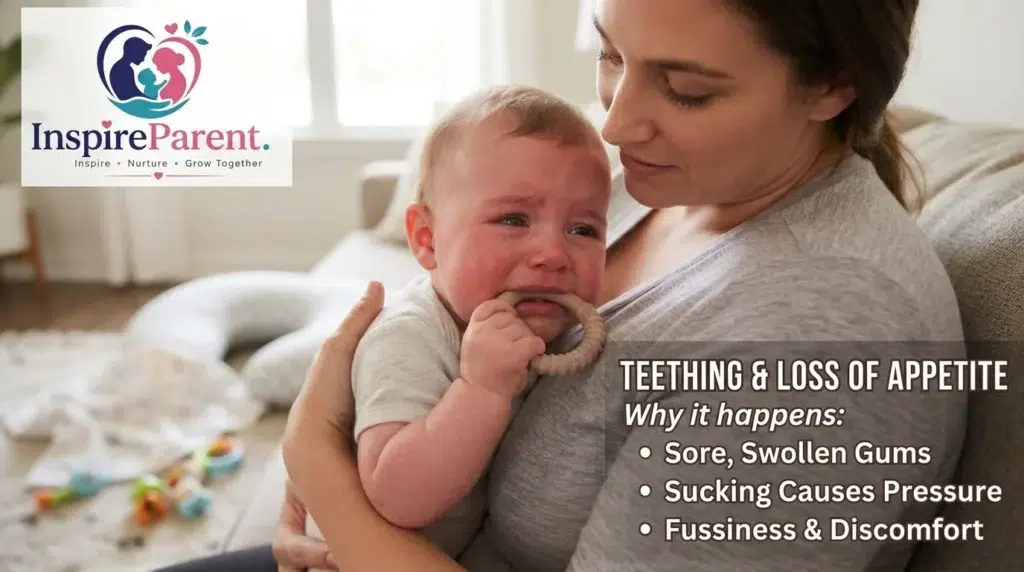
Yes, babies often eat less when teething. When a tooth pushes through the gums, the area gets sore, swollen, and sensitive. Sucking on a bottle or breast, or chewing food, can press on that sore spot. So your baby may eat less, nurse for shorter times, or refuse food for a day or two.
According to the Center for Pediatric Dentistry, this is usually temporary. It becomes a concern only if the low appetite lasts longer than a few days.
Here’s the short version:
- Teething can reduce appetite. The gum pain makes eating uncomfortable.
- It usually passes quickly. Most babies bounce back within days.
- Comfort helps. Cool, soft foods and gentle gum care make meals easier.
- Some signs mean “call the doctor.” We’ll cover those below.
Teething and Loss of Appetite: What’s Really Going On in Your Baby’s Mouth
Before we fix the problem, it helps to understand it.
Teething is the natural process of your baby’s first teeth breaking through the gums. Those teeth have been sitting under the gum line since before birth. When they finally push upward, the gum tissue stretches, swells, and gets tender.
Think about how a sore tooth or a mouth ulcer feels to you. Now imagine trying to eat a sandwich with that pain. You’d probably chew carefully or skip lunch. Your baby feels something similar, but they can’t tell you what’s wrong. All they know is that eating hurts, so they refuse.
Why Sucking Hurts More Than You’d Think
Babies who drink milk have a special challenge. Sucking creates pressure in the mouth. That pressure can push against swollen gums and make them throb. So a baby who used to nurse happily for 15 minutes might now pull away after two.
Other Things That Make Teething Babies Eat Less
Gum pain isn’t the only reason. Teething often brings other symptoms that affect appetite:
- Lots of drooling, which can irritate the skin and the mouth
- Fussiness and crying, which leave little energy or patience for meals
- Poor sleep, since tired babies are often cranky eaters
- Constant chewing on hands and toys, which can fill the “mouth need” without any food
The Momcozy parent’s guide points out the same pattern: gum soreness, irritability, and broken sleep all pile up and push appetite down.
Teething Symptoms in Babies: How to Tell If Teething Is the Culprit
Before blaming teething, check whether your baby shows the other usual signs. The NHS lists the common teething symptoms, and most babies show a few of them, not all.
Common signs of teething include:
- Red or swollen gums. You may even see a small bump or a white spot where the tooth is coming in.
- Heavy drooling. Bibs get soaked fast.
- Chewing on everything. Fingers, toys, blankets, your shoulder.
- Fussiness. Your usually calm baby seems cranky for no clear reason.
- Waking at night. Sleep gets broken even if your baby was a good sleeper.
- Eating less. This is the one we’re talking about today.
- Rubbing the cheek or pulling the ear. Gum pain can feel like it spreads to the ear and cheek.
The Age Question
Most babies start teething between 4 and 7 months, according to KidsHealth. The first teeth to appear are usually the two bottom front teeth. But every baby has their own timeline. Some get a tooth at 3 months, and others don’t see one until after their first birthday. Both can be perfectly normal.
A Quick Reality Check
Here’s something many parents don’t hear enough: teething is not supposed to cause a high fever, diarrhea, or a bad rash. A slightly warm baby (under 100.4°F, or 38°C) can happen during teething. Anything higher deserves a call to your doctor. We’ll cover that in detail later.
How Long Does a Baby Lose Appetite When Teething?
This is the question every tired parent asks next. Fortunately, the news is good.
Most babies eat less for just a few days around the time a tooth breaks through the gum. Once the tooth is out and the soreness eases, appetite usually returns to normal. This matches what the Momcozy guide says about the loss of appetite being temporary, and it’s backed by medical sources like Ashton & Parsons, which advise calling a doctor if appetite loss goes on longer than expected.
What “Normal” Looks Like
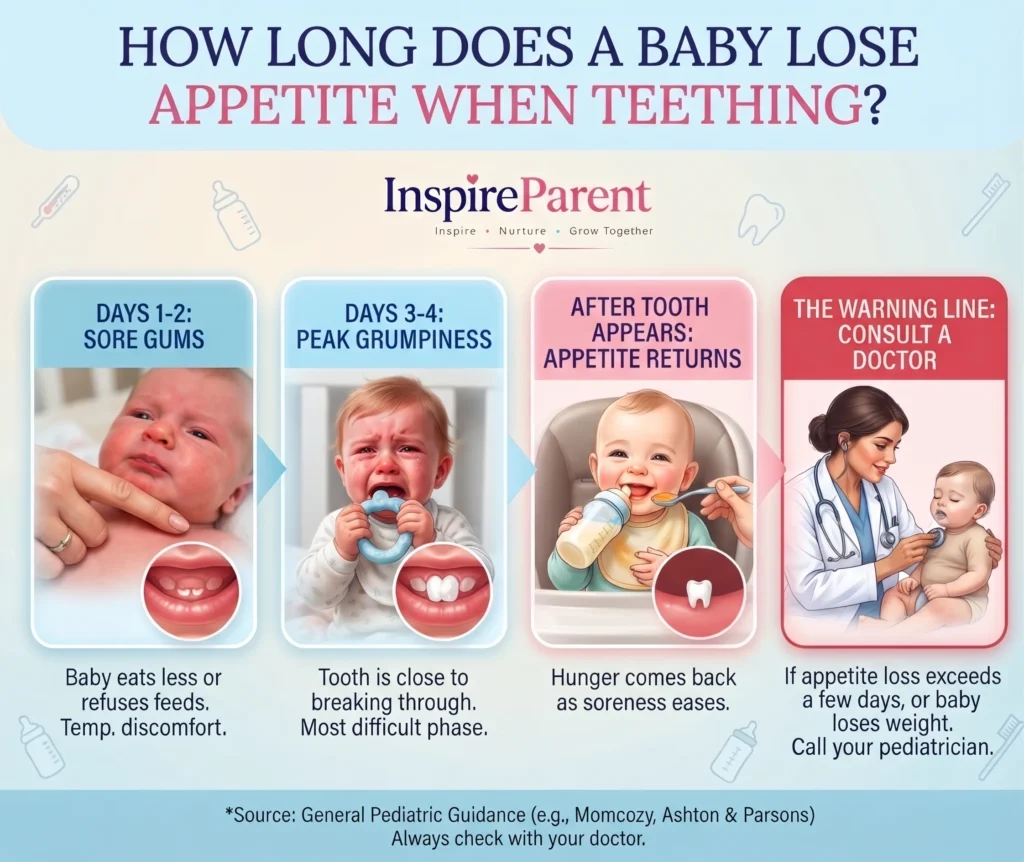
Here’s a simple picture of a typical teething appetite pattern:
- Days 1–2: The gums are sore. Your baby eats smaller amounts or refuses some feeds.
- Days 3–4: The tooth is close to breaking through. Your baby may be at their grumpiest.
- After the tooth appears: Hunger slowly comes back.
Of course, some babies have a rough patch that lasts a bit longer, especially when several teeth come in close together. That’s why the same worry can come back every few weeks during the first two years.
The Warning Line
If your baby refuses to eat for more than a few days, loses weight, or seems unusually sleepy, don’t wait it out. Teething is a common reason for eating less, but it’s not the only one. It’s always smart to rule out other causes like ear infections, colds, or tummy trouble.
Teething Baby Won’t Eat Solids: A Story Every Parent Will Recognize
Let me tell you about a mom we’ll call Sara. (She’s a composite of many parents’ stories, so you can picture her easily.)
Sara’s 8-month-old, Eli, used to gobble up sweet potato like it was cake. One morning he pushed the spoon away, scrunched his face, and screamed. Sara tried again at lunch. Same thing. By dinner she was googling at 9 p.m. with a cold cup of tea beside her.
Then she noticed something: a little white edge on Eli’s bottom gum. She had been so focused on the food that she’d never checked his mouth.
The next day she changed her plan. Instead of warm purée, she served chilled yogurt on a soft spoon. She gave him a cold teether to chew before the meal. And she stopped pushing. Eli ate half a bowl. Not a full meal, but enough. Two days later the tooth poked through, and he was back to demanding seconds.
The lesson? Sara didn’t need a miracle trick. She needed to work with the sore gums instead of against them.
Why Solids Can Feel Harder Than Milk
When a teething baby won’t eat solids, there are a few likely reasons:
- Chewing and mashing put pressure on sore gums.
- Warm or textured foods can sting. Lumpy purées or crunchy bits may feel rough.
- Your baby is distracted by discomfort. It’s hard to focus on a spoon when your mouth hurts.
The fix is to make solid food as gentle as possible, which brings us to the next section.
Best Foods for Teething Babies: What to Offer When Appetite Is Low
Good news: you don’t need fancy recipes. The best foods for teething babies are soft, simple, and easy to swallow.
Soft and Cool Beats Hot and Hard
The Center for Pediatric Dentistry suggests chilled (but not frozen) soft foods such as applesauce, yogurt, or mashed banana. Cool foods can feel soothing on swollen gums. The Momcozy guide recommends the same cooled yogurt, applesauce, and fruit purées.
Meanwhile, Vinmec International Hospital advises soft, pureed, or liquid foods like porridge, soups, and broths. They also say to avoid foods that are too hot or too cold, since extreme temperatures can bother a sensitive mouth. The sweet spot is cool or room temperature, not icy and not steaming.
Easy Food Ideas by Texture
Smooth and cool:
- Plain yogurt (for babies who’ve started dairy)
- Chilled applesauce
- Mashed ripe banana
- Chilled avocado mash
Soft and warm (not hot):
- Oatmeal or rice porridge
- Mild vegetable soup
- Mashed sweet potato
- Soft scrambled egg
Nourishing extras:
- Foods with calcium such as cheese, eggs, and milk-based foods, which Vinmec highlights for baby’s growth
- Beans, mashed well, for age-appropriate protein
What About Juice?
Some sources suggest adding fruit juice for vitamins. Many pediatric groups, however, advise limiting or skipping juice for babies, especially under one year old. If you’re unsure, ask your pediatrician first. Breast milk, formula, and (for older babies) small sips of water are usually the safest choices.
Safety Note on Textures
When you offer finger foods, always choose shapes and softness that are safe for your baby’s age to avoid choking. Never leave a baby alone while eating.
Teething Baby Refusing Bottle or Breast: What to Do Step by Step
Milk is your baby’s main food in the early months, so a teething baby refusing the bottle or breast can feel scarier than skipped solids. The good news is that milk matters most, and most babies still manage some of it.
Why Milk Feeds Get Tricky
As mentioned, sucking pressure can hurt swollen gums. Some babies nurse in short bursts, unlatch to cry, then try again. Others clamp down or bite, because biting feels good on sore gums. (Ouch, we know.)
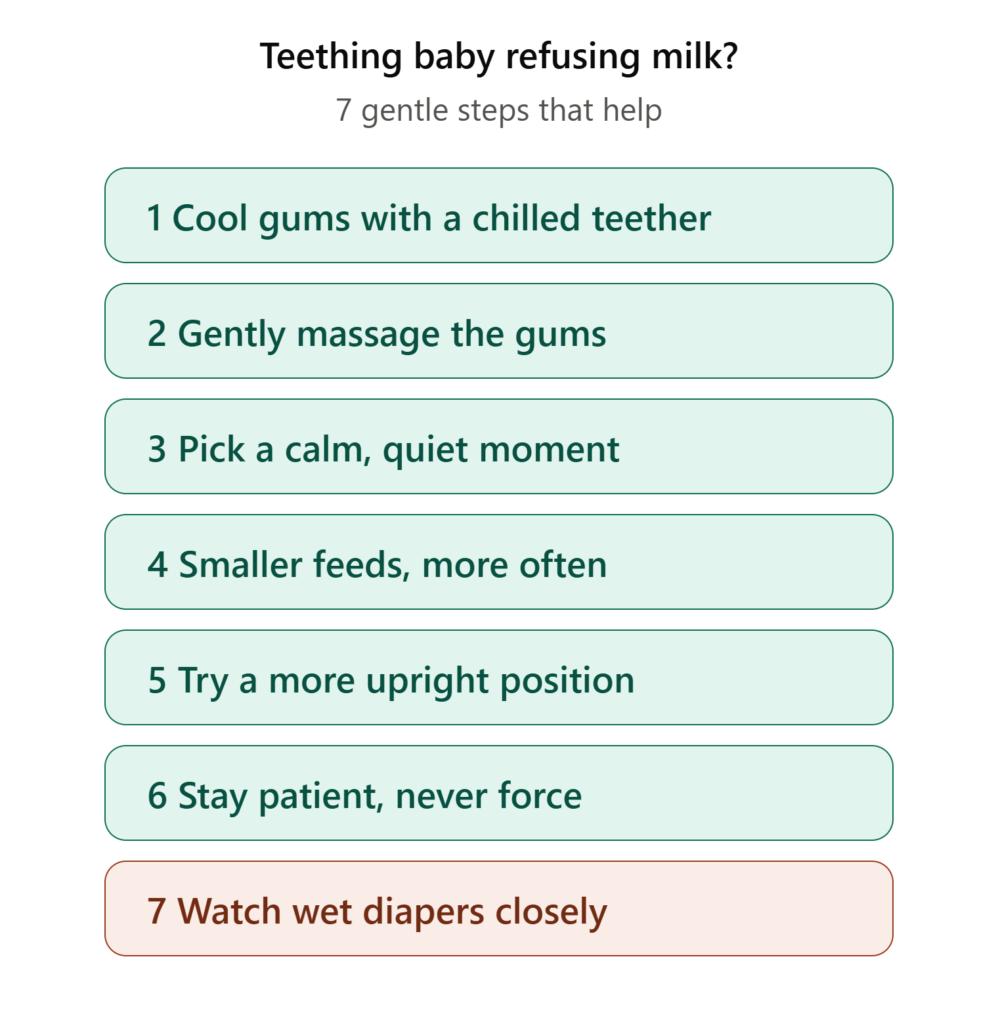
Step-by-Step: Making Milk Feeds Easier
Step 1: Cool the gums first.
About 10–15 minutes before feeding, let your baby chew on a clean, chilled (not frozen) teether. This can numb the area slightly.
Step 2: Gently massage the gums.
Wash your hands well. Then use a clean finger to rub the sore spot for about a minute. Vinmec recommends gentle gum massage with well-washed hands to avoid passing bacteria into the mouth.
Step 3: Pick a calm moment.
Choose a quiet room with dim light and no TV. A fussy teething baby needs a peaceful setup.
Step 4: Offer smaller feeds more often.
Instead of one long feed, try short ones every 1–2 hours. This keeps the experience positive, and it’s what both the Momcozy and Vinmec articles recommend: smaller portions, offered more frequently.
Step 5: Try a different position.
Some babies find it more comfortable to feed more upright. Experiment a little.
Step 6: Stay patient.
Pushing or forcing can make your baby link feeding with stress. Vinmec warns against harsh methods for exactly this reason.
Step 7: Watch wet diapers.
This is your hydration check. If diapers drop sharply, call your doctor.
Hydration Matters Most
Even if solid food drops, keeping up with milk or formula protects your baby from dehydration. If you’re worried about fluid intake, that’s a good reason to ring your pediatrician rather than guess.
How to Soothe a Teething Baby So They Can Eat Comfortably
A comfortable baby is a hungrier baby. So soothing the pain is often the fastest route to better meals. Let’s walk through options, from gentlest to strongest.
1. Cold, Not Frozen
Cold things numb the gums. The Mayo Clinic suggests cooling the gums with chilled items, such as a cold teething ring or a cool, wet washcloth. Keep it cold from the fridge rather than hard-frozen, which can be too harsh on tender gums.
2. Teething Rings and Textured Toys
Safe, BPA-free teethers give your baby something firm to bite. The pressure and texture also massage the gums. Look for one-piece designs with no small parts that could come loose.
3. Gentle Gum Massage
A clean finger rubbed gently over the gums is free and always available. Short sessions work best.
4. Extra Cuddles
Never underestimate comfort. Vinmec suggests patting the back, cuddling, talking, and playing to distract and calm a baby in pain.
5. Keep the Drool Under Control
Wipe the chin and neck often and use a soft bib. Dry skin helps prevent the rashes that heavy drooling can cause.
6. Pain Relief Medicine, Only With Medical Advice
If pain is really disrupting sleep and feeding, a doctor may recommend infant pain relief. The Momcozy guide notes that infant acetaminophen is generally used for babies over 2 months, and infant ibuprofen for babies over 6 months, but these are only for use as your pediatrician advises. Doses depend on weight, so always follow your doctor’s instructions and the product label.
What to Skip
The Momcozy article also reminds parents to ask their pediatrician before using teething gels or homeopathic remedies, since some contain ingredients that aren’t safe for infants. When in doubt, stick with simple, safe methods like cold teethers and gum massage.
Teething Baby Feeding Schedule: A Simple Day Plan
Many parents ask whether they should change the routine. Usually, a light adjustment works better than a total overhaul.
A Flexible Plan for a Rough Teething Day
Here’s a sample you can adapt. Think of it as a rhythm, not a rule.
| Time | What to try |
|---|---|
| Morning | Cold teether for 10 minutes, then a milk feed |
| Mid-morning | Small snack: chilled yogurt or mashed banana |
| Midday | Soft, mild meal (porridge or soft veggie mash) |
| Afternoon | Milk feed with a calm cuddle |
| Late afternoon | Small, cool snack like applesauce |
| Evening | Soft dinner, then a gentle gum massage |
| Bedtime | Final milk feed in a quiet room |
Tips to Make It Work
- Follow your baby’s lead. If they only want milk for a day, that’s okay.
- Keep portions tiny. A few spoonfuls count.
- Don’t turn meals into battles. Stay relaxed. Babies pick up on tension.
- Return to normal gradually. Once the tooth appears, slowly bring back usual portions and textures.
The Raising Children Network is a helpful resource if your baby’s pickiness seems to go beyond teething.
Here’s where parents often get stuck. Teething symptoms look a lot like cold symptoms. Drooling, restlessness, and poor sleep can happen with both. The Children’s Hospital Los Angeles explains why the two get confused: they overlap, and babies chewing on toys also pick up more germs.
Other Reasons Babies Eat Less
According to the Momcozy guide, a drop in appetite can also come from:
- Illness or infection. Colds, ear infections, and digestive issues all lower hunger.
- Growth spurts. Some babies actually eat less around rapid growth phases.
- Routine changes. Travel, a new caregiver, or a new schedule can throw things off.
- Distractions. Noise and screens can pull a baby away from the plate.
- Stuffy nose. Congestion makes feeding hard because babies breathe through their noses while eating.
A Simple Way to Tell the Difference
Ask yourself:
- Can I see or feel a tooth coming? Swollen gums and a visible bump point to teething.
- Is the temperature normal or just slightly raised? A mild rise under 100.4°F can fit with teething.
- Is the baby otherwise acting like themselves in between fussy spells? If yes, teething is more likely.
- Are there signs that don’t fit? High fever, vomiting, diarrhea, or a rash suggest something else.
Teething Baby Not Eating: When to Call the Doctor
Most teething appetite dips are harmless. Still, some situations need medical attention. Call your pediatrician if you notice:
- Refusing food for more than a few days
- Weight loss or fewer wet diapers than usual
- A fever above 100.4°F (38°C)
- Diarrhea or vomiting
- A rash that isn’t from drool
- Unusual sleepiness or limpness
- Signs of pain in the ears or a persistent cough or cold
The Center for Pediatric Dentistry also advises seeing a pediatrician or pediatric dentist if your baby refuses food consistently, loses weight, or seems lethargic. And the Momcozy guide says clearly that high fever, diarrhea, and rashes need a doctor’s check because they aren’t typical teething signs.
The “Gut Feeling” Rule
You know your baby best. If something feels off, even if you can’t explain it, make the call. Doctors would much rather hear from you early.
Teething Relief Products for Babies: Why the Right Teether Makes Mealtime Easier
So far we’ve covered food, feeding, and comfort. Now let’s talk about the tool that can tie everything together: a good teether.
A Short Story About “Mealtime Prep”
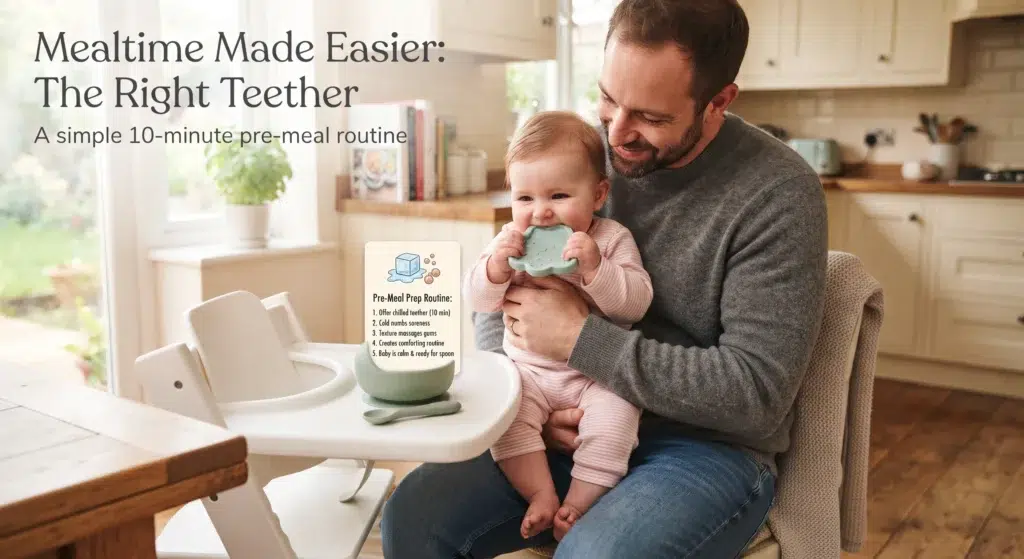
Here’s how another composite parent, Daniel, described his routine. His 7-month-old daughter Maya used to scream at the sight of a spoon. Then Daniel started a small habit: ten minutes of cold teether time before every meal. Nothing fancy. Maya chewed, drooled, and calmed down. When the spoon came out, she was ready to try.
It didn’t fix everything. Some meals were still messy. But the battles got shorter, and that’s a win any tired parent can celebrate.
Why Pre-Meal Teether Time Works
A cool teether can help in three ways:
- It numbs. The cold takes the edge off the soreness.
- It massages. Gentle pressure counters the ache from underneath.
- It sets a routine. Babies feel safer when they know what’s coming next.
What to Look for When You Choose a Teether
Before you buy, check for:
- Safe materials. Look for BPA-free, food-grade, non-toxic options.
- Easy-to-hold shape. Small hands need chunky, simple grips.
- Gentle textures. Soft bumps and ridges give nice massaging pressure.
- Cool-friendly design. It should be safe to chill in the fridge (not the freezer).
- Easy cleaning. Teethers go in the mouth a hundred times a day, so you need to wash them properly.
- No small parts. One-piece designs lower the risk of anything coming loose.
Final Thoughts:
Do Babies Eat Less When Teething? Yes, and You’ve Got This
So, do babies eat less when teething? Yes, they often do. Sore, swollen gums make sucking and chewing uncomfortable, and tired, cranky babies aren’t in the mood to eat. The good news is that this phase is usually short, and you have plenty of ways to help.
Let’s recap the key points:
Appetite dips are common and usually last only a few days.
Cool, soft foods and small, frequent feeds make meals easier.
Gum massage and chilled teethers bring comfort before eating.
A calm, patient approach protects your baby’s relationship with food.
High fever, diarrhea, weight loss, or long refusal mean it’s time to call the doctor.
A safe, well-made teether can become your best mealtime helper.
The next time your baby turns away from the spoon, remember Sara, Eli, Daniel, and Maya. A tiny tooth is on its way, a little patience goes a long way, and soon you’ll be back to the happy mess of mashed banana on every surface.
Frequently Asked Question
Do babies eat less when teething every single time?
Not always. Some babies barely seem to notice new teeth, while others struggle with every one. Every baby is different, and the same baby can react differently to different teeth.
Can teething cause a baby to refuse solids but still drink milk?
Yes. Milk is easier to swallow, so some babies stick to it during sore days. As long as your baby is drinking well and having normal wet diapers, this is usually fine for a short time.
Should I stop solids altogether during teething?
You don’t have to. Offer soft, cool foods in small amounts, and let your baby lead. If they say no, try again later rather than forcing it.
Does teething cause fever?
At most a slight rise in temperature. A temperature of 100.4°F (38°C) or higher is a real fever, so call your doctor.
Are teething gels safe?
Avoid them for babies under 2. Use a chilled (not frozen) teether and gentle gum massage instead.