Introduction
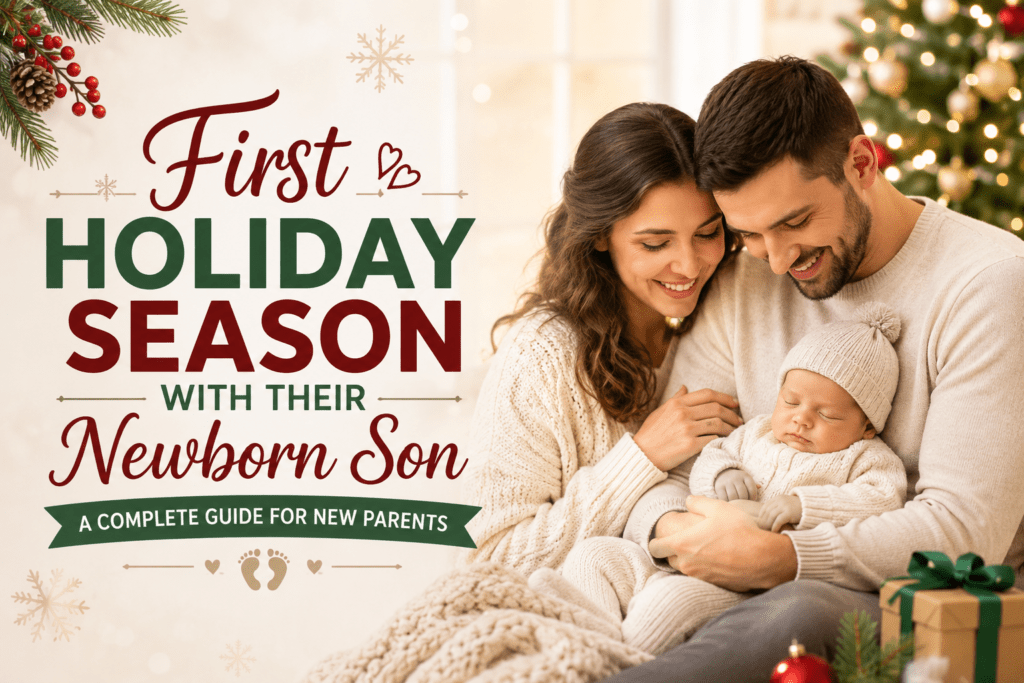
A family’s first holiday season with their newborn son can feel joyful, emotional, exciting, and slightly overwhelming—all at the same time. The house may be filled with warm lights, wrapped gifts, family messages, and plans for gatherings. However, life with a newborn still follows its own simple rhythm: feeding, sleeping, diaper changes, cuddling, and starting all over again.
That is why the best first holiday with a baby is not always the busiest one. It is usually the holiday where parents slow down, protect their baby’s routine, and enjoy small moments without putting pressure on themselves.
Picture this: it is Christmas morning, the living room is quiet, and your little boy is asleep against your chest. You planned to open gifts early, prepare a large breakfast, and take dozens of photos. Instead, you spend twenty peaceful minutes watching his tiny fingers move while he sleeps. Years later, that unplanned moment may become the memory you value most.
Parents do not need an expensive celebration to make first holiday season with their newborn sonmeaningful. A few thoughtful traditions, safe products, practical gifts, and simple family activities are often enough.
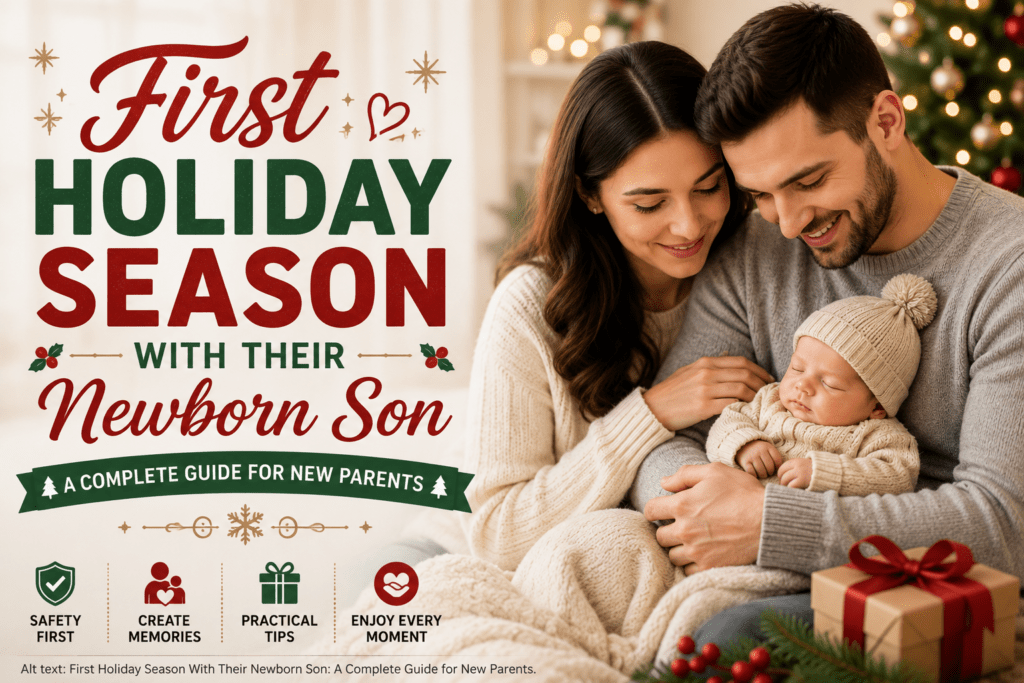
This guide explains how to plan your newborn’s first holiday, attend family gatherings safely, create traditions, choose useful gifts, travel with less stress, take memorable photos, control holiday spending, and care for yourself along the way.
Important: This article offers general information. Speak with your baby’s pediatrician when making health, feeding, sleep, or travel decisions for your newborn.
Why the First Holiday Season Is Special
Your baby will not remember his first Christmas, Hanukkah, New Year celebration, or family holiday dinner. You, however, probably will.
The first holiday season with their newborn son marks the beginning of a new stage in family life. Traditions that once involved only adults now include a small person who will grow up seeing, hearing, and taking part in them.
The experience is special for several reasons.
You Are Creating a New Family Identity
Before your son arrived, you may have divided the holidays between two families or followed traditions created by your parents. Now, you have the chance to decide what the holidays will mean inside your own home.
You may continue some childhood traditions, leave behind the ones that create stress, and start new ones that suit your growing family.
For example, one couple may decide to spend Christmas Eve at home instead of driving between several relatives’ houses. Another may start reading the same holiday story beside the tree each year. A third family may prepare a special breakfast while their baby wears the same style of holiday pajamas every December.
The tradition itself does not need to be impressive. Its meaning comes from repeating it with love.
Ordinary Moments Become Important Memories
Your baby may sleep through the family dinner or cry during the carefully planned photo session. That does not ruin the holiday. It becomes part of the story.
Parents often remember the imperfect details:
- The holiday outfit that only stayed clean for ten minutes
- The ornament that arrived with the wrong year printed on it
- The family photo where everyone smiled except the baby
- The gift box the baby found more interesting than the gift
- The midnight feeding beside the glowing Christmas tree
These moments make newborn holiday memories feel real rather than staged.
The Holiday Feels Different for the Parents
Having a first holiday season with their newborn son can change how parents view time. A baby grows quickly, which can make every “first” feel important.
However, do not allow that feeling to create pressure. You do not need to attend every event, photograph every moment, or purchase every keepsake. Being present matters more than building a perfect holiday scene.
For simple activity ideas, Pampers offers a useful guide to holiday activities you can do with a baby.
Planning Ahead for Your Newborn’s First Holiday
Good planning does not mean filling every day with activities. It means removing avoidable stress before the holiday begins.
Use the following step-by-step plan.
Step 1: Choose Your Three Main Priorities
first holiday season with their newborn son start by selecting only three things that matter most to your family.
For example:
- Having a peaceful holiday morning at home
- Visiting the baby’s grandparents
- Taking one good family photograph
Everything else should be treated as optional.
This approach protects you from accepting invitations simply because you feel guilty. A newborn’s needs can change quickly, so leave open time between activities.
Step 2: Protect Feeding and Sleep Time
Newborns do not understand holiday schedules. They may need to feed while guests are eating dinner or fall asleep just as everyone begins opening gifts.
Instead of forcing your baby into the family schedule, build your plans around his normal patterns.
Pack or prepare:
- Feeding supplies
- Burp cloths
- Extra diapers and wipes
- Two or three changes of clothing
- A portable changing mat
- Pacifiers, when used
- A familiar soothing item
- A safe place for the baby to sleep
A newborn should sleep on his back on a firm, flat surface in an approved crib, bassinet, portable crib, or play yard. Soft bedding, pillows, loose blankets, stuffed toys, and sleep positioners should not be placed in the sleep area.
Review the American Academy of Pediatrics’ safe sleep recommendations before hosting overnight guests or traveling.
Step 3: Set Visitor Rules Early
Do not wait until someone arrives with a cough to decide your visitor policy.
Send a kind but clear message before the gathering:
“We are excited for everyone to meet the baby. Because he is still very young, please stay home if you have a cough, fever, runny nose, stomach illness, or any other signs of sickness. Please wash your hands before holding him, and do not kiss his face or hands.”
Newborns can become seriously ill from respiratory infections. RSV may spread before a person shows obvious symptoms, while babies and young children face a higher risk of severe illness.
The CDC also advises family members and caregivers around newborns to stay current with recommended vaccinations and use measures such as handwashing and respiratory hygiene.
Clear boundaries may disappoint a few people. That is less serious than exposing a newborn to avoidable illness.
Step 4: Shop Before the Final Week
Complete essential shopping early. Last-minute crowds, low stock, shipping delays, and rushed buying decisions create unnecessary stress.
Use a newborn essentials checklist to separate genuine needs from attractive but unnecessary baby products.
Purchase practical items first:
- Diapers
- Wipes
- Feeding supplies
- Safe sleepwear
- Weather-appropriate clothing
- Basic health and grooming items
- Travel supplies
- Replacement batteries or chargers
After these needs are covered, you can consider keepsakes, outfits, toys, and decorations.
Meaningful Holiday Traditions With a Newborn
A newborn does not need complicated entertainment. His favorite parts of the holiday will probably be hearing familiar voices, being held, looking at lights from a safe distance, and resting close to his parents.
Here are traditions that can grow with him.
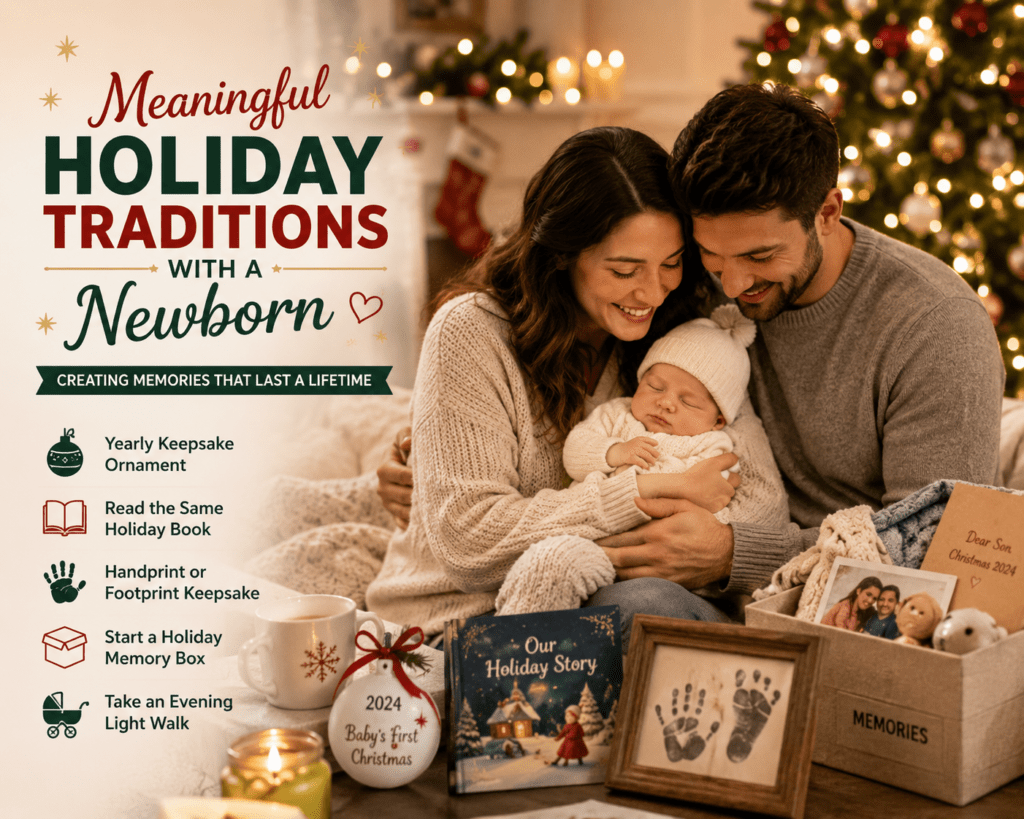
Choose a Yearly Keepsake Ornament
A first holiday season with their newborn sonis one of the few holiday products that may still matter decades later.
Choose a design that includes your son’s name and birth year. Avoid poorly attached small parts, sharp edges, or fragile pieces that may later become accessible to a young child.
Hang the ornament out of reach and store it carefully after the holiday.
Read the Same Holiday Book Every Year
Choose a short holiday book and write a note inside the cover each year. In the first year, the note might describe where you celebrated and what your baby was like at that age.
Newborns may not understand the story, but listening to a parent’s voice supports bonding and early communication. Pampers includes reading and talking among simple newborn bonding activities.
Create a Handprint or Footprint Keepsake
A framed footprint, salt-dough ornament, or inkless print can capture how small your son was during his first holiday.
Use a baby-safe, non-toxic product and supervise the activity closely. Wash the baby’s skin after using any paint or ink product according to its instructions.
Do not become frustrated when the print is not perfect. Curled toes and smudged edges make it more personal.
Start a Holiday Memory Box
Place a few meaningful items in a labeled box:
- A copy of the holiday card
- A family photograph
- Your baby’s holiday outfit
- A handwritten letter
- A small keepsake
- A list of his favorite sounds or soothing habits
- A newspaper clipping or printed family story
Add one or two items each year. By the time your son becomes an adult, the box will tell the story of his childhood holidays.
Take an Evening Light Walk
First holiday season with their newborn son,Dress your baby for the weather, place him safely in a stroller or suitable baby carrier, and take a short walk to see neighborhood lights.
Keep the trip brief. A newborn can become overstimulated by noise, crowds, and bright displays. The goal is not to see every decoration. It is to spend a calm moment together.
Parents using a wrap, sling, or carrier should check the manufacturer’s newborn weight requirements and make sure the baby’s airway remains visible and open. A baby’s chin should not be pressed against his chest.
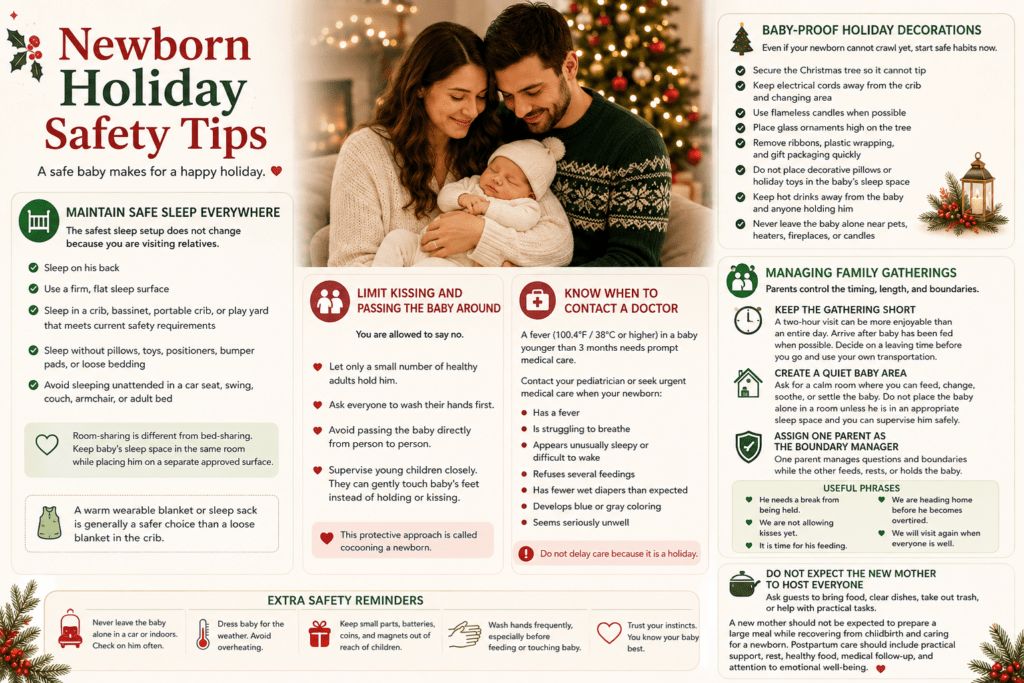
Newborn Holiday Safety Tips
Holiday decorations, visitors, travel, and disrupted routines introduce risks that may not exist during an ordinary week.
Maintain Safe Sleep Everywhere
The safest sleep setup does not change because you are visiting relatives.
Your baby should:
- Sleep on his back
- Use a firm, flat sleep surface
- Sleep in a crib, bassinet, portable crib, or play yard that meets current safety requirements
- Sleep without pillows, toys, positioners, bumper pads, or loose bedding
- Avoid sleeping unattended in a car seat, swing, couch, armchair, or adult bed
Room-sharing is different from bed-sharing. Parents can keep the baby’s sleep space in the same room while placing him on a separate approved surface.
A warm wearable blanket or sleep sack is generally a more suitable choice than placing a loose blanket in the crib.
Baby-Proof Holiday Decorations
Even if your newborn cannot crawl yet, begin using safer decorating habits now.
The U.S. Consumer Product Safety Commission recommends keeping sharp, breakable, food-like, and small removable decorations away from children. It also advises checking lights for damage, avoiding overloaded outlets, keeping live trees watered, and never leaving burning candles unattended.
Follow these basic rules:
- Secure the Christmas tree so it cannot tip
- Keep electrical cords away from the crib and changing area
- Use flameless candles when possible
- Place glass ornaments high on the tree
- Remove ribbons, plastic wrapping, and gift packaging quickly
- Do not place decorative pillows or holiday toys in the baby’s sleep space
- Keep hot drinks away from the baby and anyone holding him
- Never leave the baby alone near pets, heaters, fireplaces, or candles
Limit Kissing and Passing the Baby Around
A large family gathering can quickly turn into a long line of people waiting to hold the baby.
You are allowed to say no.
Consider letting only a small number of healthy adults hold him. Ask everyone to wash their hands first, and avoid passing the baby directly from person to person.
Young children should be supervised closely. They can sit beside an adult and gently touch the baby’s feet rather than holding or kissing him.
The American Academy of Pediatrics describes this protective approach as cocooning a newborn.
Know When to Contact a Doctor
A temperature of 100.4°F or 38°C or higher is considered a fever in a young infant. A baby younger than three months with a fever should receive prompt medical assessment rather than being treated only at home.
Contact your pediatrician or seek urgent medical care when your newborn:
- Has a fever
- Is struggling to breathe
- Appears unusually sleepy or difficult to wake
- Refuses several feedings
- Has fewer wet diapers than expected
- Develops blue or gray coloring
- Seems seriously unwell
Do not delay care because it is a holiday.
Managing Family Gatherings
Family members may be eager to celebrate your first holiday season with their newborn son, but parents should control the timing and length of the visit.
Keep the Gathering Short
A two-hour visit can be more enjoyable than an entire day.
Arrive after the baby has been fed when possible. Decide on a leaving time before you go, and use your own transportation so you are not dependent on someone else.
Create a Quiet Baby Area
Ask the host for a calm room where you can feed, change, soothe, or settle the baby.
However, do not place the baby alone in a room unless he is in an appropriate sleep space and you can supervise him safely.
Assign One Parent as the Boundary Manager
One parent may be feeding, recovering from birth, or holding the baby. The other parent can manage questions and boundaries.
Useful phrases include:
- “He needs a break from being held.”
- “We are not allowing kisses yet.”
- “It is time for his feeding.”
- “We are heading home before he becomes overtired.”
- “We will visit again when everyone is well.”
A respectful family member may feel disappointed, but should still follow the parents’ rules.
Do Not Expect the New Mother to Host Everyone
If the family gathers in your home, ask guests to bring food, clear dishes, take out trash, or help with practical tasks.
A new mother should not be expected to prepare a large meal while recovering from childbirth and caring for a newborn. Postpartum care should include practical support, rest, healthy food, medical follow-up, and attention to emotional well-being.
Thoughtful Gift Ideas for a Newborn Son
Newborn holiday gifts should be safe, useful, suitable for the baby’s age, and easy for parents to store.
1. A Practical Newborn Holiday Gift Set
A well-planned newborn holiday gift set may include:
- Soft bodysuits
- Zippered sleepers
- Burp cloths
- Bibs
- Diapers
- Wipes
- A fitted crib sheet
- A baby-safe board book
- An age-appropriate sensory toy
This type of bundle gives parents products they will actually use. It also saves them from purchasing several basic items separately.
Before buying, confirm clothing sizes, fabric care instructions, product age ranges, and the family’s preferred diaper or feeding brands.
2. A Safe Sleep Sack
A properly sized sleep sack is a practical alternative to loose crib blankets. Choose the correct size and warmth rating for the baby’s age, weight, room temperature, and climate.
Check that the neck and arm openings fit securely and that the item does not cover the baby’s face.
3. High-Contrast Books or Cards
Young babies are often more interested in simple, high-contrast patterns than complicated toys. Black-and-white books or cards can be used during short periods of supervised play.
A newborn’s first toy should be simple, safe, easy to clean, and free from small removable parts. Mom Loves Best provides additional guidance on choosing early baby toys.
4. Personalized Keepsakes
Good keepsake options include:
- A name ornament
- An engraved photo frame
- A memory book
- A personalized stocking
- A custom blanket for supervised use
- A printed star map showing the baby’s birth date
Personalization makes a simple product feel more thoughtful. Double-check spelling, dates, and delivery times before ordering.
5. A Family Photo Book
Instead of buying another toy, give the parents a photo-book credit or create a small album using pictures from the baby’s first weeks on first holiday season with their newborn son.
This gift has emotional value without taking up much space.
6. Useful Gifts for the Parents
Supporting the parents also supports the baby.
Consider:
- A meal-delivery gift card
- Grocery delivery
- Housecleaning help
- Comfortable loungewear
- A large water bottle
- A night-light for feeding and diaper changes
- A prepaid photography session
- A contribution toward diapers or medical expenses
How to Buy Baby Products With Confidence
Before purchasing any baby item:
- Buy from a known and trusted retailer.
- Read the age, weight, and size requirements.
- Check for small parts and choking warnings.
- Review the CPSC recall database.
- Avoid products that make unsupported medical or sleep-safety claims.
- Read the manufacturer’s instructions before use.
- Keep the receipt in case the item does not suit the baby.
The CPSC advises consumers to buy toys from trusted sellers, follow age guidance, check choking warnings, and verify recalls when considering secondhand products.
A product is worth buying when it solves a genuine problem, meets recognized safety requirements, and fits the family’s lifestyle. Attractive packaging alone is not a good reason to purchase it.
Traveling During the Holidays With a Newborn
first holiday season with their newborn son,Travel is possible with a newborn, but it should not be treated like an ordinary holiday trip.
Speak with your pediatrician before traveling, especially when the baby was born prematurely, has a medical condition, has feeding difficulties, or is only a few weeks old.
Traveling by Car
Before leaving:
- Check the weather and road conditions
- Confirm that the rear-facing car seat is installed correctly
- Pack feeding and diaper supplies within easy reach
- Carry extra clothing for the baby and parents
- Plan regular stops
- Bring a safe sleep space for your destination
- Avoid driving when dangerously tired
Bulky coats can create space between the baby and the car-seat harness. NHTSA recommends dressing children in thin, warm layers, fastening the harness securely, and placing a coat or blanket over the harness afterward.
A car seat is designed for travel. Once you reach your destination, move the baby to an approved flat sleep surface rather than leaving him to sleep in the car seat.
Traveling by Air
Airports expose families to crowds, delays, noise, and circulating illnesses. The American Academy of Pediatrics notes that crowded airports and air travel can increase a newborn’s exposure to infection.
Pack:
- More diapers than you expect to use
- Two or three baby outfits
- A spare shirt for each parent
- Feeding supplies
- Burp cloths
- Pacifiers
- Plastic bags for wet clothing
- Basic medical information
- Any prescribed medicine
- A lightweight stroller or suitable carrier
In the United States, formula and breast milk are permitted in carry-on bags in quantities greater than the standard liquid limit and do not need to fit inside a quart-sized bag. Review the latest TSA guidance for baby formula and breast milk before your flight.
Taking Memorable Holiday Photos
The best first holiday season with their newborn son photo is not necessarily the most complicated one.
Choose the Right Time
Take photographs shortly after the baby has been fed, burped, and changed. Keep the room warm and the session short.
Stop when the baby appears hungry, tired, cold, or overstimulated.
Use a Simple Setup
A safe photo setup of first holiday season with their newborn son may include:
- A plain blanket used only while the baby is awake and supervised
- Natural window light
- A simple holiday outfit
- One soft decorative item placed away from the baby’s face
- A parent’s hands for support
Never place a newborn inside a glass container, unstable basket, hanging prop, open gift box, or elevated setup without professional safety measures.
Capture Real Moments
Photograph:
- The baby sleeping safely in his bassinet
- A parent reading a holiday book
- Grandparents meeting him
- Tiny hands near a keepsake ornament
- A feeding beside the tree
- The baby wearing his first holiday outfit
- Both parents holding him together
One mother planned an elaborate photo session with matching clothes, artificial snow, and several decorations. Her baby cried through every planned pose. Later that evening, her partner took a simple phone photo while she rocked the baby beside the tree. That unplanned picture became the family’s favorite.
The lesson is simple: document the relationship, not only the decorations.
Budgeting for Baby’s First Holiday
New parents are easy targets for emotional marketing. Every product may appear to be something your baby “needs” for his first holiday.
Most of it is optional.
Set a Total Holiday Budget
Create one clear spending limit of first holiday season with their newborn son that includes:
- Gifts
- Decorations
- Food
- Travel
- Clothing
- Photography
- Keepsakes
- Shipping
For example, a family with a $500 holiday budget might divide it like this:
- $150 for travel
- $100 for food
- $75 for baby essentials
- $50 for one keepsake
- $50 for gifts
- $25 for photos
- $50 as an emergency buffer
The amounts can change, but the buffer is important. Babies create unexpected expenses.
Follow the One-Keepsake Rule
Choose one high-quality keepsake instead of purchasing several personalized products.
A single ornament, memory book, or framed photograph can carry more meaning than a collection of items bought because of holiday pressure.
Do Not Buy Too Many Newborn-Sized Clothes
Babies grow quickly, and sizing differs between brands. Buy small quantities and consider purchasing the next size up.
Mom Loves Best recommends avoiding excessive newborn clothing and notes that some babies may not fit standard newborn outfits for long. Its baby clothing quantity guide can help parents plan more realistically.
Buy Useful Products, Not Holiday Clutter
Ask three questions before making a purchase:
- Will we use this after the holiday?
- Is it safe for our baby’s current age?
- Do we already own something that performs the same job?
When the answer to all three supports the purchase, you can buy with greater confidence.
Self-Care for New Parents During the Holidays
Parents often focus so completely on creating a first holiday season with their newborn sonthat they forget they are still adjusting physically and emotionally.
Lower Your Expectations
You may not decorate the entire house. You may serve prepared food. You may leave a gathering early. You may spend Christmas morning feeding the baby instead of opening gifts.
None of that represents failure.
Divide Responsibilities Clearly
Do not rely on one parent to notice and manage every task.
Divide responsibilities such as:
- Packing the diaper bag
- Communicating visitor rules
- Preparing bottles or feeding supplies
- Managing gifts
- Cleaning
- Driving
- Taking photos
- Settling the baby after gatherings
Clear responsibility reduces resentment and last-minute arguments.
Accept Useful Help
Useful help is specific.
Instead of asking, “Do you need anything?” relatives can:
- Bring dinner
- Wash dishes
- Pick up groceries
- Fold laundry
- Walk the dog
- Hold the baby while a parent showers
- Return packages
- Clean the kitchen
The goal is not to entertain visitors. It is to reduce the parents’ workload.
Watch Your Emotional Health
Exhaustion, physical recovery, feeding challenges, and holiday expectations can affect emotional well-being.
Speak with a healthcare professional when sadness, anxiety, panic, hopelessness, anger, or frightening thoughts feel severe, continue, or make daily life difficult. ACOG advises new parents to build a postpartum support network and discuss emotional health as part of ongoing postpartum care.
The holiday can be meaningful without being cheerful every minute.

Conclusion
A first holiday season with their newborn son does not need to be perfect, expensive, or packed with events. It needs to be safe, manageable, and meaningful for the new family.
Plan only a few important activities. Protect the baby’s feeding and sleep needs. Set firm visitor boundaries. Choose age-appropriate products from trusted sellers. Travel only when it makes sense for your family, and leave room in the schedule for rest.
Most importantly, do not measure the holiday by the number of gifts, gatherings, or photographs you complete.
Your son may sleep through the celebration. He may cry during dinner. He may stain his special outfit before anyone sees it. Even so, the quiet cuddles, midnight feedings, tiny yawns, and first family traditions will become part of a story you remember for years.
Buy products that provide real value, choose keepsakes with lasting meaning, and let the rest remain simple. Your baby does not need a perfect holiday.
He needs safe care, calm parents, and a home filled with love.
Frequently Asked Questions
1. How can parents make their baby’s first holiday special?
Choose a few simple activities such as taking a family photograph, reading a holiday book, creating a footprint keepsake, purchasing one personalized ornament, and writing a letter to the baby. Small repeated traditions usually carry more meaning than an overloaded schedule.
2.Is it safe to take a newborn to a large family gathering?
It depends on the baby’s age, health, the size of the gathering, current illness levels, and the pediatrician’s advice. Keep visits short, avoid sick guests, require handwashing, limit who holds the baby, and provide a quiet place for feeding and rest.
3.Should relatives be allowed to kiss a newborn?
It is reasonable for parents to ask relatives not to kiss a newborn, especially on the face and hands. People with symptoms of illness should not visit. Clear rules help reduce exposure to respiratory and other infections.
5. How many gifts does a newborn need?
A newborn does not need many gifts. One meaningful keepsake and a few practical items are enough. Parents can also ask relatives to contribute toward diapers, meals, savings, or future needs.
6. Can a newborn sleep in a car seat during holiday travel?
A baby may fall asleep while properly secured during a car journey. However, after reaching the destination, the baby should be moved to an approved firm, flat sleep surface rather than continuing to sleep in the car seat.
7. How can parents take good holiday photos without stressing the baby?
Feed and change the baby first, use natural light, keep the setup simple, and limit the session to a few minutes. Stop when the baby becomes uncomfortable. Natural family moments often produce better photographs than complicated poses.
8. What should parents pack for a newborn holiday visit?
Pack diapers, wipes, feeding supplies, burp cloths, extra baby clothing, an extra parent shirt, pacifiers when used, a changing mat, plastic bags, health information, and a safe portable sleep space when needed.
9. How can new parents say no to holiday invitations?
Respond early and keep the message simple: “We are keeping our first holiday quiet while the baby is still very young, so we will not be able to attend. We would love to arrange a shorter visit later.”
You do not need to provide a long explanation.
10. What should parents do if their newborn develops a fever during the holiday?
A temperature of 100.4°F or 38°C or higher in a baby younger than three months requires prompt medical guidance. Contact the baby’s pediatrician or seek urgent care rather than waiting for the holiday to end.