
How Everyday Routines Support Healthy Child Development: A Practical Guide for Parents
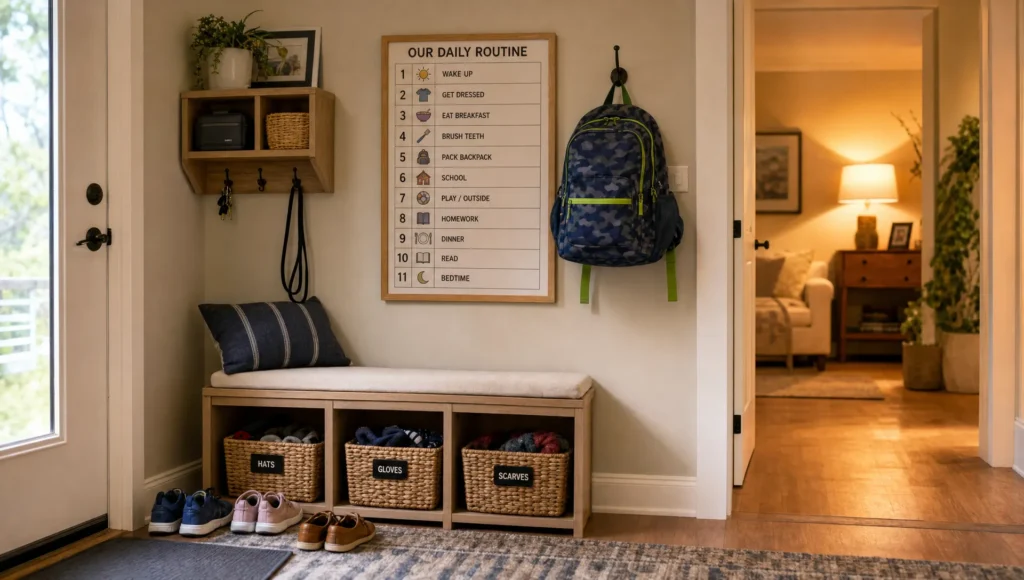
Children do not need a perfectly planned day to grow, learn, and feel secure. What they often need most is a sense of what comes next. A simple morning routine, regular mealtime, playtime, homework habit, or calming bedtime ritual can give children structure while helping them build skills they will use throughout life.
How everyday routines support healthy child development is not just about getting children ready on time or keeping the house organized. Daily routines can support independence, self-regulation, responsibility, confidence, emotional security, healthy habits, and social skills. They also give parents regular opportunities to connect with their children.
Research and expert guidance discussed by Parents emphasize that predictable routines can help children feel more secure, develop self-regulation, support healthy sleep patterns, and manage transitions such as going to school.
For parents looking for reliable parenting information, resources such as What to Expect, BabyCenter, and Parents can also provide additional family and child-development guidance.
What Are Everyday Routines for Children?
An everyday routine is a series of activities that regularly happen in a similar order. It does not necessarily mean doing everything at exactly the same time every day.
For example, a child’s morning routine might look like:
- Wake up.
- Use the bathroom.
- Brush teeth.
- Get dressed.
- Eat breakfast.
- Pack the school bag.
- Put on shoes.
- Leave for school.
A bedtime routine could include taking a bath, putting on pajamas, brushing teeth, reading a story, talking about the day, and going to sleep.
This difference between a routine and a strict schedule is important. A schedule may tell a child that something must happen at 7:00 p.m., while a routine focuses more on the familiar sequence of activities.
Parents notes that routines can provide familiarity and predictable structure without requiring every activity to happen at exactly the same time.
How Everyday Routines Support Healthy Child Development
One of the biggest benefits of how everyday routines support healthy child development is that they help children understand their environment.
Imagine a four-year-old who has no idea what will happen after breakfast. One morning, Mom asks the child to get dressed. The next morning, Dad suddenly announces that they are leaving. Another morning, everyone rushes around looking for shoes.
For a young child, this can feel confusing.
Now imagine a different morning. The child knows: breakfast comes first, then getting dressed, then the school bag, and then leaving home.
That predictable pattern can make everyday life easier to understand.
According to experts quoted by Parents, routines can provide children with comfort, predictability, and a sense of mastery. Consistent routines are also associated with areas such as self-regulation, healthy sleep, academic adjustment, and social-emotional development.
1. Routines Build a Sense of Security
Children often feel more comfortable when they know what to expect.
A predictable morning routine, mealtime routine, and bedtime routine can create familiar points throughout the day. This can be especially helpful during changes such as starting school, moving to a new home, traveling, or adjusting to a new family schedule.
For example, a child may feel nervous about bedtime. Instead of suddenly saying, “Go to bed,” parents can follow a familiar sequence:
Bath → pajamas → brush teeth → story → cuddle → lights out.
After repeated use, the child begins to recognize the pattern.
The routine itself becomes a signal that the day is slowing down.
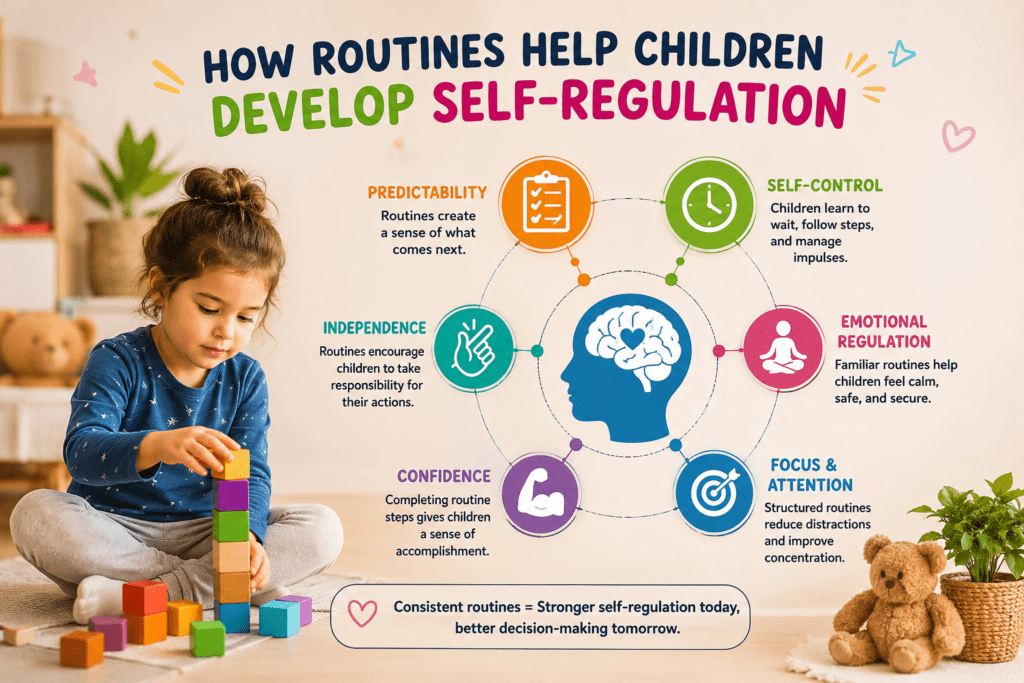
How Routines Help Children Develop Self-Regulation
Self-regulation means learning to manage emotions, behavior, attention, and responses.
Children are not born knowing how to wait patiently, stop playing when it is time for school, or calm themselves before bedtime. These skills develop gradually.
A predictable routine gives children repeated opportunities to practice them.
For example, suppose a child is playing with blocks when it is time to clean up. At first, the child may complain.
A parent can calmly say:
“Five more minutes, then we clean up.”
The child gets an opportunity to stop, transition, and begin another activity.
With practice, transitions may become easier.
Research discussed by Parents connects consistent routines with children’s ability to regulate emotions and handle daily transitions.
How Daily Routines Build Independence
One of the most valuable things parents can give children is the chance to do appropriate tasks for themselves.
A routine creates natural opportunities for this.
Instead of always brushing a child’s teeth, a parent might eventually allow the child to brush first and then help finish the job.
Instead of always packing the school bag, a parent can create a checklist and let the child collect the necessary items.
Instead of putting every toy away, parents can make clean-up time part of the daily routine.
These small responsibilities can help children develop:
- Independence
- Responsibility
- Organization
- Problem-solving
- Self-confidence
- Self-care skills
Recent guidance published by Parents also highlights age-appropriate household responsibilities such as getting dressed, putting toys away, setting the table, clearing dishes, and packing a school bag as ways children can develop responsibility and independence.
How Morning Routines Support Healthy Child Development
Mornings can be one of the hardest parts of family life.
A child does not want to get dressed. Someone cannot find a sock. Breakfast is getting cold. The school bus is coming. Suddenly everyone is stressed.
A consistent morning routine for children can reduce some of this confusion.
Try creating a simple routine:
Step 1: Wake Up
Give your child enough time to wake up rather than immediately rushing them.
Step 2: Get Ready
Use a simple checklist:
- Bathroom
- Wash face
- Brush teeth
- Get dressed
Step 3: Eat Breakfast
Keep breakfast reasonably predictable while still offering variety.
Step 4: Prepare School Items
Encourage your child to check their backpack.
Step 5: Leave Home
Use the same final steps each morning.
You can even create a visual routine chart for children using pictures. This can be especially helpful for younger children who cannot read confidently yet.
Parents recommends breaking routines into manageable steps for younger children and using simple cues or visual reminders when appropriate.
How Bedtime Routines Support Healthy Child Development
A calm bedtime routine can help children transition from an active day toward sleep.
Instead of making bedtime a sudden command, create a predictable sequence.
For example:
Dinner → quiet play → bath → pajamas → brush teeth → story → cuddle → sleep.
The goal is not perfection. The goal is familiarity.
A bedtime routine can also become a valuable bonding opportunity. Reading together, talking about the child’s favorite part of the day, or sharing a short conversation can help create positive family connections.
Parents recommends calming bedtime rituals such as reading, bathing, and talking about the day as part of a consistent evening routine.
How Mealtime Routines Support Healthy Habits
Family meals can be more than simply a way to provide food.
A regular mealtime routine gives children opportunities to practice:
- Sitting with others
- Using table manners
- Talking and listening
- Trying different foods
- Recognizing hunger and fullness
- Participating in family life
Parents do not need to make every meal perfect.
A simple family routine such as eating dinner together when possible can create a regular opportunity for connection.
It is also important to avoid turning every meal into a battle. Children may have changing preferences, and occasional picky eating is common. If you have concerns about your child’s nutrition, growth, or eating behavior, discuss them with your child’s pediatrician or another qualified healthcare professional. Parents also emphasizes flexibility around children’s eating rather than treating every preference as a major problem.
How Routines Help Children Develop Responsibility
Responsibility grows through practice.
A child who is always told exactly what to do may have fewer opportunities to learn how to manage tasks independently.
Instead, parents can connect responsibilities to existing routines.
For example:
After playing → put toys away.
After eating → take the plate to the kitchen.
Before school → check the backpack.
Before bed → put dirty clothes in the hamper.
These tasks may look small, but they teach an important message:
“I can contribute to my family.”
Parents reports that age-appropriate responsibilities can help children develop a sense of routine, self-worth, autonomy, and contribution to family life.
How Routines Support Social and Emotional Development
Routines are not only about chores and schedules.
They can also strengthen social-emotional development.
Consider a simple after-school routine:
Come home → greet parent → snack → talk about the day → rest → homework or play.
That short conversation after school can give a child a regular opportunity to share feelings.
Maybe the child had an argument with a friend.
Maybe a teacher praised their work.
Maybe they felt nervous about a test.
Because talking becomes part of the routine, children may gradually become more comfortable expressing their thoughts.
Regular connection can help children feel that their parents are available to listen.
A Simple Everyday Routine Anecdote Every Parent Can Relate To
Consider a mother named Sarah and her six-year-old son, Adam.
Every morning, Sarah used to say:
“Get dressed!”
Then:
“Brush your teeth!”
Then:
“Where is your backpack?”
Then:
“Put your shoes on!”
By 8:00 a.m., everyone was frustrated.
One weekend, Sarah decided to make a simple picture chart.
It showed:
Get dressed → Brush teeth → Breakfast → Backpack → Shoes
On Monday morning, instead of repeating every instruction, Sarah pointed to the chart.
Adam looked at it and said, “I’m on breakfast!”
A few weeks later, he began completing several steps without being reminded.
Nothing magical had happened.
The family had simply turned a confusing series of instructions into a predictable routine.
This is one of the most useful lessons for parents: routines do not need to be complicated to work.

How to Create a Healthy Daily Routine for Your Child
If your family currently has little structure, do not try to change everything in one day.
Start small.
Step 1: Identify the Most Difficult Part of the Day
Ask yourself:
When does my child struggle most?
Is it:
- Morning?
- Mealtime?
- Homework?
- Bath time?
- Bedtime?
- Leaving the house?
Start there.
Step 2: Choose Three to Five Steps
Do not create a list of 20 tasks.
For a young child, keep the routine simple.
For example:
Bedtime:
- Pajamas
- Brush teeth
- Story
- Cuddle
- Sleep
Step 3: Explain the Routine
Tell your child why you are introducing it.
You could say:
“We’re making a bedtime routine so you know what happens next.”
Step 4: Use Visual Reminders
A visual schedule for children can be particularly helpful for young children.
You can use pictures, drawings, printed cards, or a child-friendly routine chart.
Step 5: Practice Consistently
The first few days may not go smoothly.
That is normal.
Children need time to learn new patterns.
Step 6: Praise Progress
Instead of only correcting mistakes, notice effort.
Say:
“You remembered to put your shoes away without me asking.”
That gives the child specific feedback.
Step 7: Adjust When Necessary
If the routine consistently causes problems, change it.
A routine should serve the family—not make family life harder.
Age-Appropriate Routines for Different Children
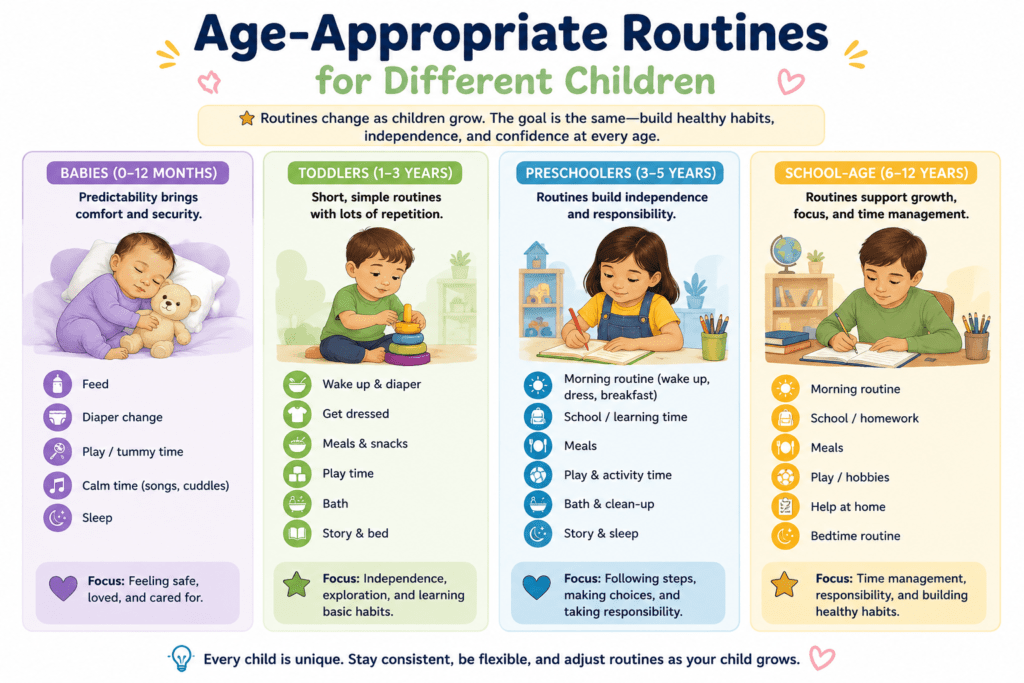
Every child develops at a different pace, so routines should match the child’s age and abilities.
Babies and Toddlers
Focus on simple, repeated experiences.
For example:
Feed → play → diaper change → quiet time → sleep.
Sensory experiences such as songs, cuddles, touch, and familiar sounds can also make routines comforting for very young children. Parents notes that infants and toddlers often experience routines strongly through sensory repetition.
Preschoolers
Use short instructions.
Instead of:
“Please go upstairs, get your pajamas, put them on, brush your teeth, and then come back.”
Try:
“Pajamas first.”
Then:
“Brush teeth.”
Then:
“Story time.”
Simple instructions, songs, pictures, and repetition can make routines easier for preschoolers to understand.
School-Age Children
Give children more responsibility.
They may be ready to:
- Pack their backpack
- Choose clothes
- Put toys away
- Help prepare simple meals
- Clear dishes
- Organize homework
- Prepare for the next day
Tweens and Teens
Older children can have more control over their routines.
Parents can provide boundaries while allowing teenagers to make reasonable choices about when and how they complete tasks.
The goal gradually changes from parent-managed routine to self-managed healthy habits.
Why Flexible Routines Are Better Than Perfect Schedules
One common mistake is believing that a routine must happen exactly the same way every day.
It doesn’t.
Families travel.
Children get sick.
Birthdays happen.
School holidays arrive.
Sometimes everyone stays up late because grandparents are visiting.
That does not mean the routine has failed.
In fact, occasional changes can give children opportunities to practice flexibility and coping with unexpected situations. Experts cited by Parents emphasize that consistency matters, but routines do not need to be rigid.
The goal is not:
“Everything must happen at exactly 7:00.”
The goal is:
“My child understands the general pattern of what happens next.”
Common Mistakes Parents Should Avoid When Creating Routines
Making the Routine Too Complicated
A long routine can become overwhelming.
Start with a few important steps.
Expecting Immediate Results
Children need repetition.
Give the routine time to become familiar.
Doing Everything for the Child
Helping is good, but children also need opportunities to practice independence.
Using Constant Punishment
A routine should not become a daily source of conflict.
Use calm reminders and positive reinforcement where appropriate.
Being Too Rigid
Allow room for illness, holidays, travel, and family events.
Comparing Children
One child may become independent quickly while another needs more support.
Development is not a race.
How a Visual Routine Chart Can Make Daily Life Easier
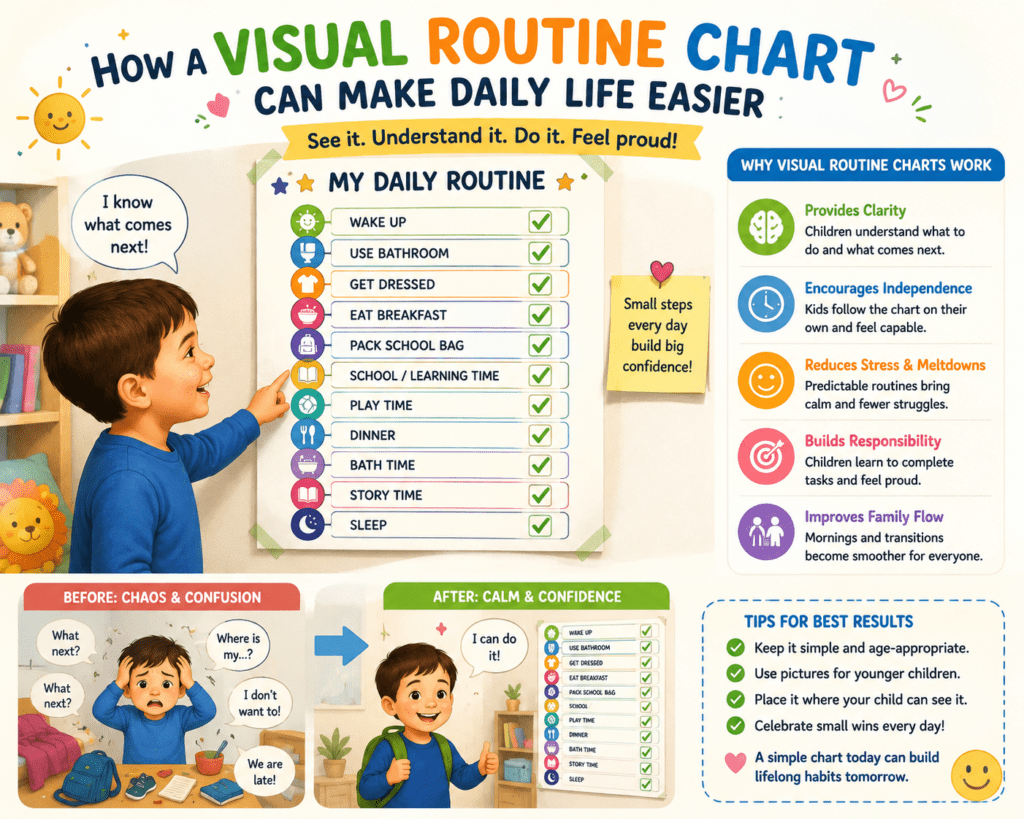
For parents who struggle with repeated reminders, a visual routine chart can be a useful tool.
Instead of saying:
“Brush your teeth.”
“Get dressed.”
“Pack your bag.”
“Put your shoes on.”
again and again, a child can look at the chart and see what comes next.
A good children’s routine chart should be:
- Easy to understand
- Age appropriate
- Visually clear
- Simple rather than crowded
- Easy for the child to use independently
- Flexible enough for your family’s lifestyle
If you decide to buy a routine chart, choose one that focuses on practical daily habits rather than one that makes your child’s day feel like a long list of rules.
The best tool is the one your child will actually use.
How Everyday Routines Support Healthy Child Development in the Long Term
The real value of routines is not simply getting through Monday morning without a meltdown.
Over time, small repeated actions can become healthy habits.
A child who learns to put away toys may become more organized.
A child who packs a school bag may become more responsible.
A child who follows a bedtime routine may learn the importance of rest.
A child who participates in family meals may develop stronger communication habits.
A child who regularly talks with a parent may become more comfortable expressing emotions.
In other words, everyday routines give children repeated practice with skills they will need as they grow.
Final Thoughts: Small Routines Can Make a Big Difference
Understanding How Everyday Routines Support Healthy Child Development can change the way parents look at ordinary moments.
Brushing teeth may seem like a small task.
Putting toys away may seem unimportant.
Reading one bedtime story may seem like just another part of the evening.
Packing a school bag may look like a simple chore.
But these repeated experiences can give children opportunities to practice responsibility, independence, self-regulation, organization, communication, confidence, and healthy habits.
Most importantly, routines can create predictable moments when children know what to expect and parents have opportunities to connect with them.
You do not need a perfect schedule.
You do not need expensive parenting products.
And you certainly do not need to turn your home into a classroom.
Start with one part of the day. Make it simple. Repeat it. Give your child a chance to participate. Then adjust it as your family grows.
Healthy child development is built through many small experiences—and everyday routines can be one of the simplest ways parents can support that growth.
Frequently Asked Questions
Why are routines important for child development?
Routines provide predictability and structure, which can help children feel secure while giving them repeated opportunities to practice independence, self-regulation, responsibility, and healthy habits.
What is a good daily routine for a child?
A good routine depends on the child’s age and family lifestyle. A basic routine might include waking up, getting dressed, eating, school or learning time, play, family time, and bedtime.
Do children need a strict schedule?
No. A routine does not need to be rigid. Consistency is useful, but flexibility is also an important life skill.
How can parents make routines easier?
Start with a few steps, use clear language, introduce visual reminders, practice consistently, and give children age-appropriate responsibilities.
What if my child refuses to follow the routine?
Stay calm and look at the reason for the resistance. The routine may be too long, unclear, difficult, or poorly timed. Simplify it and involve your child in making reasonable adjustments.