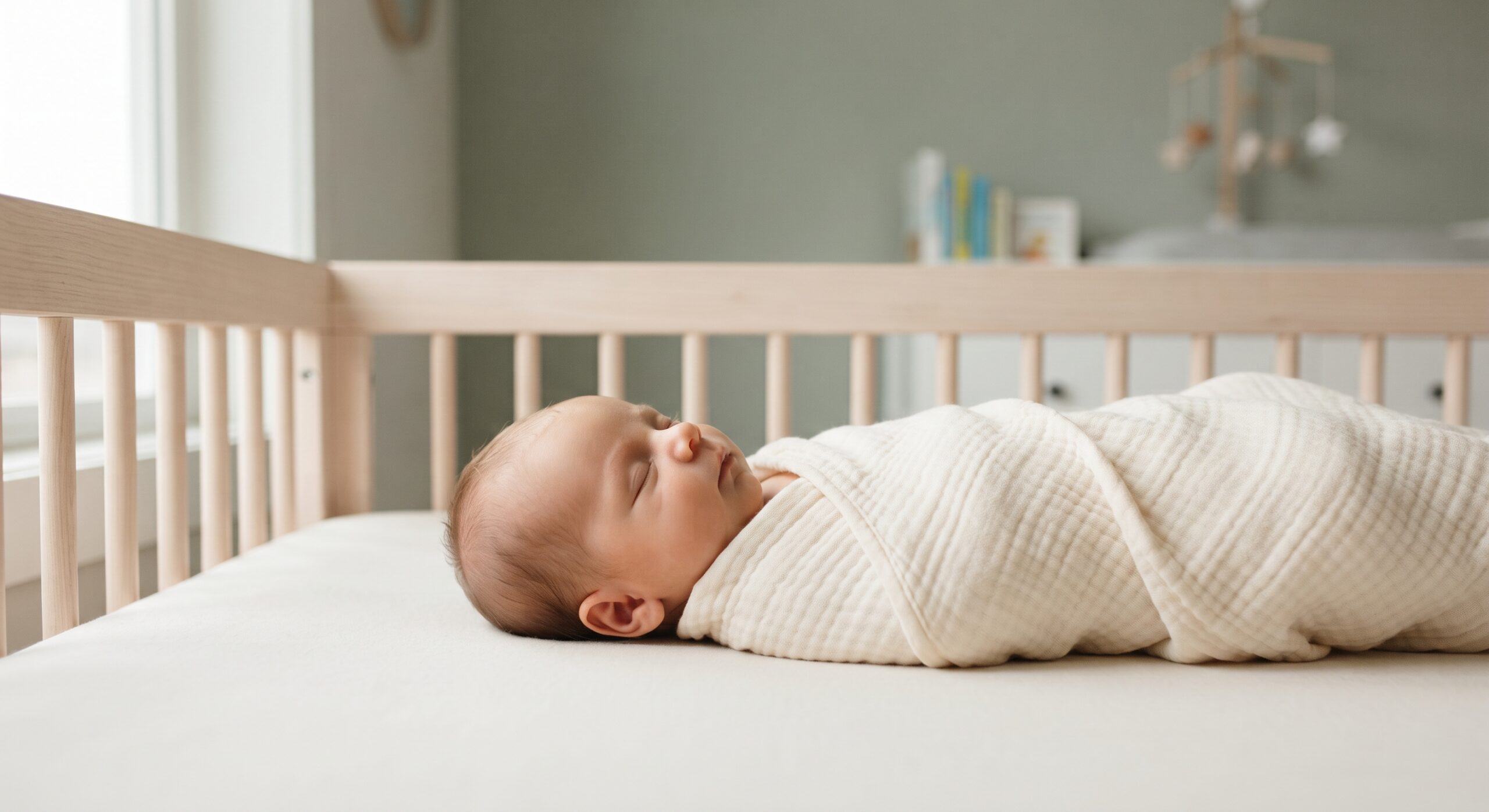
Short answer: yes. If you’re wondering is it bad for newborns to sleep on their side, pediatric experts say it’s not safe. The American Academy of Pediatrics (AAP) recommends that babies sleep on their backs for every nap and every night until their first birthday.
It’s a simple rule, but the reasons behind it matter. Once you know why, it gets much easier to stick with it at 3 a.m. when you’re exhausted and your baby looks cozy on one side. This guide covers the risks, the myths, and a step-by-step plan for setting up a safe sleep space.
A Quick Story: The Grandma Who Meant Well
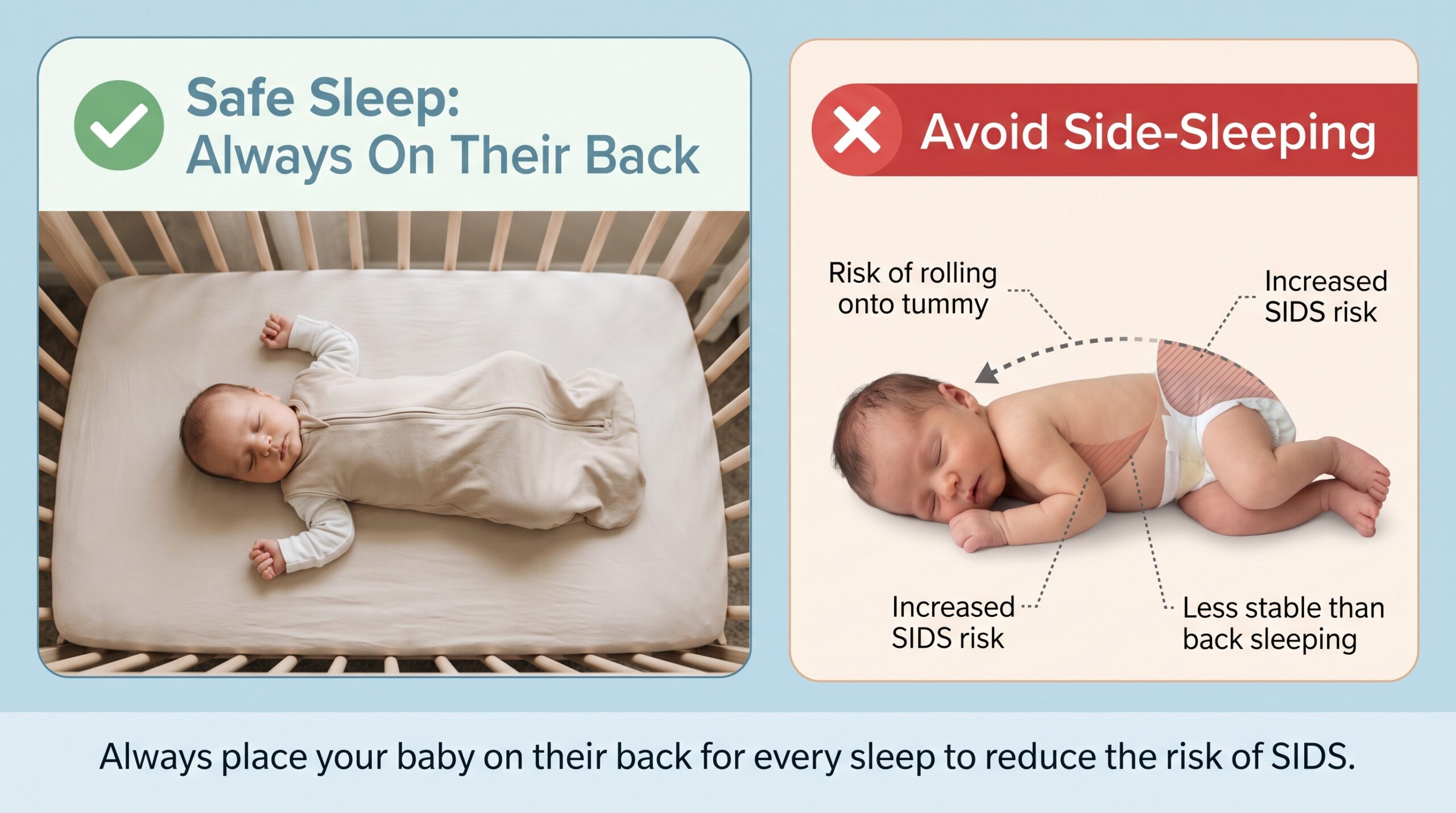
Picture a new mom named Priya. She follows every safe sleep rule at home. Then she leaves her two-week-old with Grandma for an afternoon. When she comes back, the baby is asleep on a pillow, tucked on his side.
“That’s how I put all of you kids down,” Grandma says. “You turned out fine!”
Grandma loves that baby and had no bad intentions. But advice has changed a lot since Priya was a baby, and this story plays out in homes everywhere. We’ll come back to how to handle it kindly.
Side Sleeping Risks: Why Experts Say It’s Unsafe
Side sleeping looks like a nice middle ground between the back and the tummy. It isn’t. Here’s why.
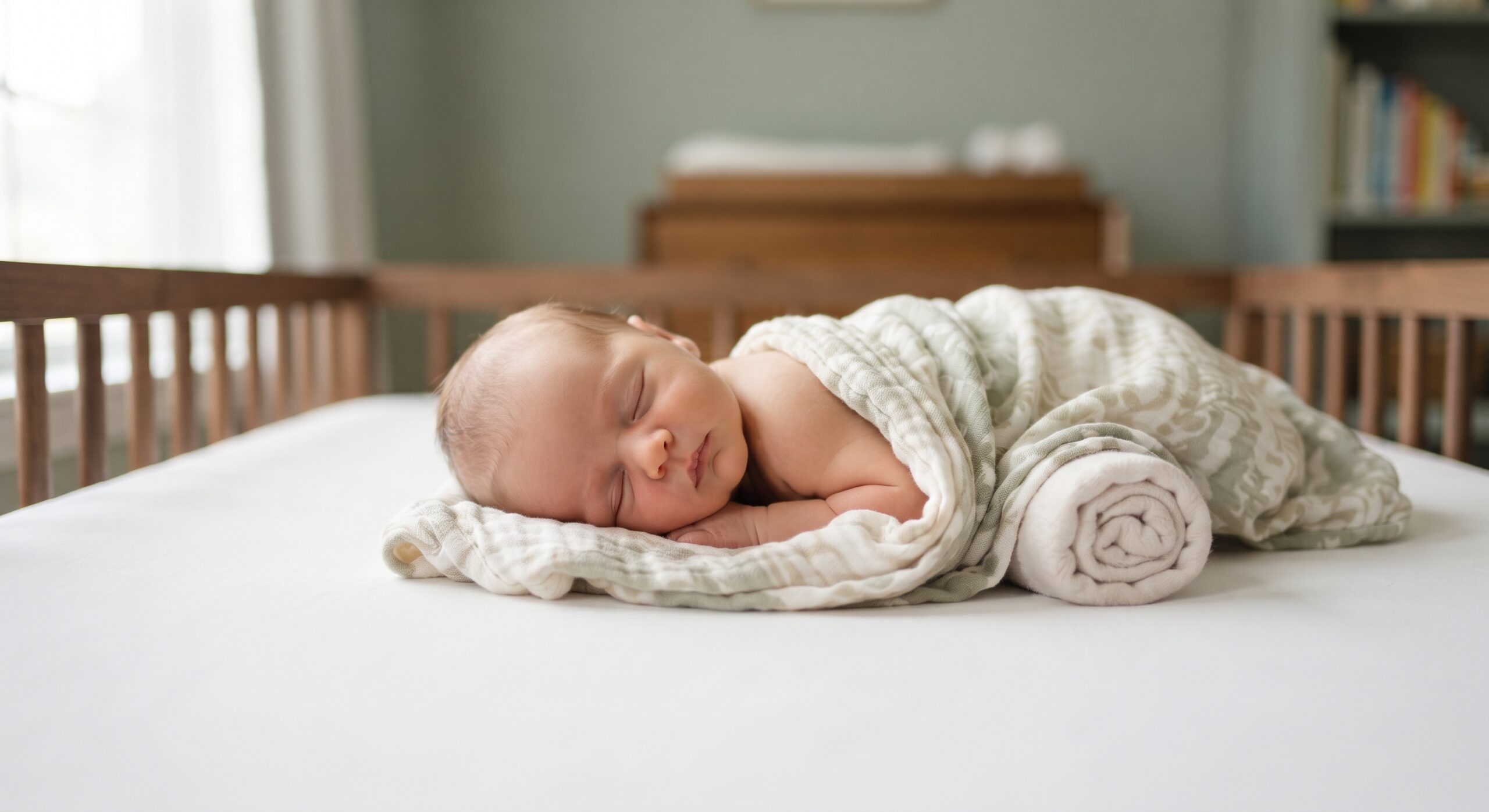
- It’s an unstable position. A newborn placed on their side can roll onto their stomach far more easily than a baby placed on their back. Face-down, a very young baby may not have the strength to lift or turn their head to breathe.
- It raises the risk of SIDS. One pediatric source says side sleeping roughly doubles the risk of sudden infant death syndrome (SIDS) compared with back sleeping.
- An unusual position is the most dangerous. According to Blueberry Pediatrics, babies used to sleeping on their backs face a much higher risk if someone puts them on their side or tummy, like at a babysitter’s house or a new daycare.
The numbers are sobering. The American SPCC reports that more than 3,500 babies in the U.S. die suddenly and unexpectedly every year while sleeping, from SIDS or accidents like suffocation. Other pediatric sources put the figure at about 3,400. Either way, the risk is real, and sleep position is one of the biggest things parents can control.
SIDS Risk and Back Sleeping: Why “Back Is Best” Works
Doctors still don’t know exactly what causes SIDS. But they do know that back sleeping lowers the risk a lot.
The proof is in the history. The “Back to Sleep” campaign started in 1994. Since then, SIDS rates have dropped by more than half, according to Blueberry Pediatrics. Today the effort is called the Safe to Sleep campaign, and the message hasn’t changed: back is best, every time.
So when you put your baby down on their back, you’re following one of the most successful public health messages in modern pediatrics.
Newborn Sleep Position Myths That Keep Parents Up at Night
Many parents know the rule but still worry. Let’s clear up the most common fears.
Myth 1: “My baby will choke on spit-up if she sleeps on her back.”
This is the number one worry, and it’s understandable. But babies have built-in protective reflexes. As the American SPCC explains, a baby’s airway anatomy and gag reflex keep them from choking on their backs. That includes babies with acid reflux (GERD). Choking rates have not gone up since the Back to Sleep campaign began, while SIDS deaths have dropped sharply.
Myth 2: “Side sleeping helps with gas or colic.”
There’s no evidence for this. For a gassy baby, try gentle tummy massages or “bicycle legs” while your baby is awake and you’re watching.
Myth 3: “An inclined sleeper helps babies with reflux.”
The AAP doesn’t recommend inclined sleep surfaces, even for reflux. Babies can slide into positions that block their airway. Some products of this type, like the Fisher-Price Rock ‘n Play, were recalled after being linked to infant deaths.
Myth 4: “Back sleeping will flatten her head.”
A flat spot, called positional plagiocephaly, is common. Close to half of babies get a mild one. It almost always improves on its own by 12 months. A flat spot is never a reason to stop back sleeping.
Newborn Sleep Patterns: Why Babies Look So Restless
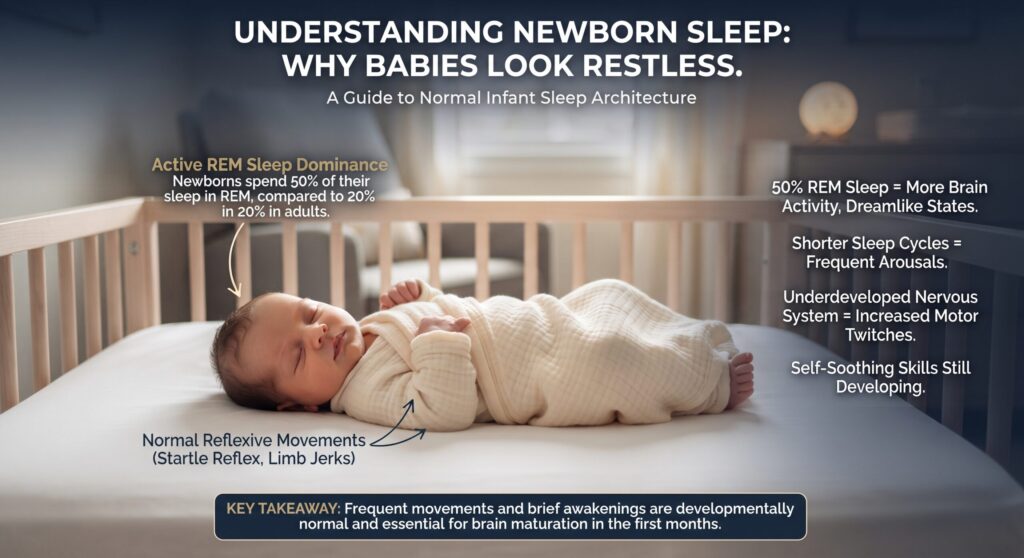
Part of the confusion comes from how noisy and wiggly newborn sleep is. Nurtured Nest explains that newborns to sleep on their side, in active sleep. During it, babies grunt, twitch, whimper, and flutter their eyes. It looks alarming, but it’s normal and important for brain development.
Newborn sleep cycles are also short, about 40 to 60 minutes, so babies stir often. A baby who squirms isn’t necessarily uncomfortable, and she doesn’t need to be flipped onto her side to “settle.”
A handy trick from that same resource is the “pause rule.” When your baby stirs, take two or three slow breaths and watch before you jump in. If the baby’s arms and legs stay relaxed and the sounds settle down, she’s probably sleeping fine. Always respond if crying builds or something seems off.
Baby Rolls Over: What to Do When Your Newborn Ends Up on Their Side
Sooner or later you’ll find your newborns to sleep on their side,or tummy. Here’s what to do, depending on their skills.
- Baby can’t roll both ways yet. Gently move them onto their back.
- Baby can roll both ways on their own. You don’t need to keep flipping them. Most babies reach this point around 4 to 6 months, but it varies.
- Always start on the back. Even after your baby can roll, begin every sleep on the back until their first birthday.
- Keep the crib bare. Once a baby is rolling, a clear sleep space matters even more, so there’s nothing to roll into.
Don’t try to fix side sleeping with wedges, positioners, or rolled-up towels. The AAP guidance summarized by the American SPCC says these products haven’t been shown to reduce SIDS, and Blueberry Pediatrics warns they can block a baby’s airway. Homemade fixes are just as risky as store-bought ones.
Swaddling Safety: Don’t Let a Swaddle Turn Into a Risk
Swaddling is fine and can calm a fussy newborn, as long as the baby is on their back. The swaddle shouldn’t be too tight or restrict breathing or hip movement.
The big rule is to stop swaddling when your baby tries to roll. This can happen as early as 2 months. A swaddled baby who rolls onto their tummy can’t use their arms to push up or turn their head. Watch for these signs:
- Your baby is trying to roll over
- Your baby keeps breaking out of the swaddle
- Your baby is around 2 months old
At that point, switch to a wearable blanket or sleep sack that leaves the arms free.
Safe Sleep Guidelines: A Step-by-Step Setup Guide
Pediatricians sum up safe sleep with the ABCs: Alone, on their Back, in a Crib. Here’s how to put that into practice.
Step 1: Choose a safe sleep surface. Pick a crib, bassinet, portable crib, or play yard that meets CPSC safety standards. The mattress should be firm and flat, and it shouldn’t dent when your baby lies on it.
Step 2: Check the fit. The fitted sheet should be made for that exact mattress. The mattress should fit snugly with no gaps at the edges.
Step 3: Keep the crib empty. No pillows, quilts, comforters, sheepskins, stuffed toys, or bumper pads. If you worry about the cold, dress your baby in one more layer than you’re wearing, or use a sleep sack.
Step 4: Place your baby on their back. Do it for every sleep, naps included.
Step 5: Share your room, not your bed. The AAP recommends keeping the baby’s sleep space in your room for at least the first 6 months, and ideally the first year. According to the American SPCC, this can cut the risk of SIDS by as much as 50%.
Step 6: Offer a pacifier. Offer one at nap time and bedtime. It’s fine if it falls out after your baby is asleep. If you’re breastfeeding, wait until feeding is going well, usually 2 to 3 weeks.
Step 7: Keep the air smoke-free. Don’t smoke around your baby, before or after birth.
Step 8: Move sleepy babies to a flat surface. If your baby falls asleep in a car seat, stroller, swing, or sling, move them to a firm, flat sleep surface on their back as soon as you can.
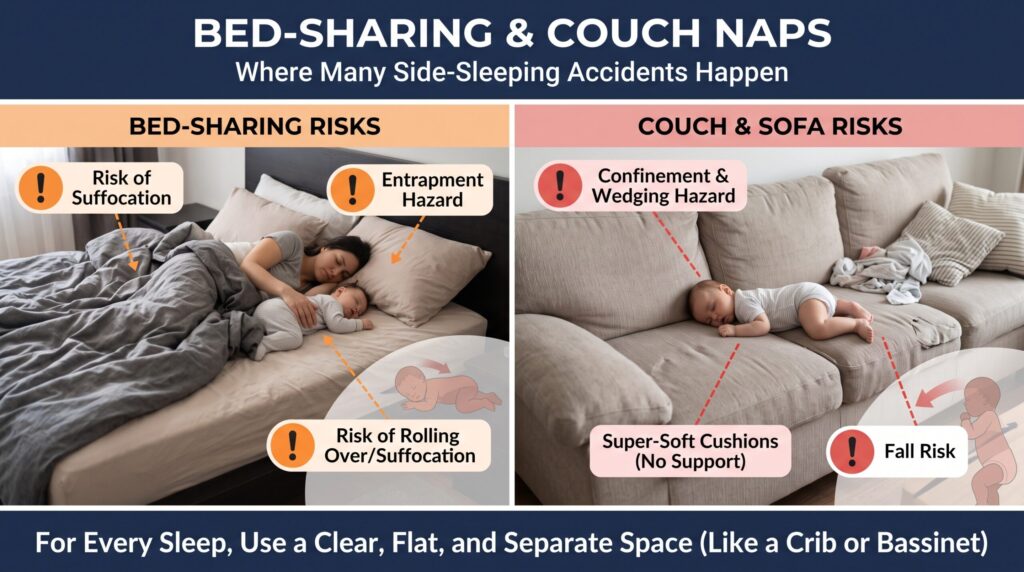
Bed-Sharing and Couch Naps: Where Many Side-Sleeping Accidents Happen
Exhausted parents sometimes doze off with a baby on the couch or in bed. These are high-risk situations. A sofa or armchair is an extremely dangerous place for a newborns to sleep on their side,, and nursing pillows and lounging pads aren’t safe for sleep either. The American SPCC notes that the CPSC warned of more than two dozen infant deaths between 2012 and 2018 involving these products.
Experts don’t recommend bed-sharing for any baby. They say it’s even riskier if:
- Your baby is younger than 4 months
- Your baby was born early or at a low birth weight
- Anyone in the bed smokes
- You’ve had alcohol or taken medicine that makes it harder to wake up
- The surface is soft, or there are pillows and blankets
If you’re feeding your baby in bed and might fall asleep, clear away the pillows and blankets first. Move the baby to their own sleep space as soon as you wake up.
Safe Sleep Habits for Every Caregiver: Talking to Grandparents and Sitters
Back to Priya. She didn’t scold Grandma. She did three things that worked:
- She said, “The doctors updated the rules since I was a baby, and I want us both to follow the new ones.”
- She showed Grandma the safe sleep page from her pediatrician.
- She set up a bassinet at Grandma’s house, with a firm mattress and nothing else in it.
By the next visit, Grandma was the one reminding Priya’s sister to put the baby on his back.
This works because it’s about the safe sleep environment, not about who’s right. Share the ABCs with every person who will ever put your baby down, including grandparents, babysitters, and daycare staff. Ask your daycare directly what their sleep policy is.
Tummy Time: The Safe Way to Get Your Baby Off Their Back
Back sleeping is for sleep only. When your baby is awake and you’re watching, tummy time builds neck, shoulder, and core strength. It also helps prevent flat spots. Blueberry Pediatrics suggests working up to at least 30 minutes a day by 3 months, starting with short sessions in the first days of life.
Never leave a baby to sleep on their tummy during tummy time. If they doze off, move them to their back in the crib.
Frequently Asked Question
Is it bad for newborns to sleep on their side?
Yes. The AAP says all babies should sleep on their backs until age 1. Side sleeping isn’t stable, and babies can roll onto their stomachs, which raises the risk of SIDS.
What if my newborn keeps turning onto their side?
If your baby can only roll one way, gently place them back on their back. If they can roll both ways, you can let them settle in their own position, but always start them on their back.
When can a baby sleep on their stomach?
Is it okay for a baby to sleep on their side for just a few minutes?
Don’t plan for it. Babies who aren’t used to side or tummy positions are at higher risk, and a “few minutes” can easily turn into a longer sleep.
When should I call the pediatrician?
Call if your baby has trouble breathing during sleep (pauses, gasping, or noisy breathing), if a flat spot is getting worse, if your baby was born early or has a health condition, or if you’re unsure whether their movements count as real rolling.